


The fastest way to deodorize a room is to find the source of the smell and remove it, open windows to ventilate, clean the affected surfaces with the right cleaner, then set out an absorber like baking soda or activated charcoal while everything dries out completely. Skipping the source-removal step and reaching straight for a spray is why so many “fixed” rooms smell bad again within a day. Consumer Reports makes the same point: fragrance covers a smell, it doesn’t solve it.
Here’s the short version to act on right now:
- Open windows and run exhaust fans to get air moving through the room for ventilation
- Bag and remove trash, dirty laundry, or anything actively rotting
- Spot-clean visible stains on fabric or hard surfaces with an appropriate cleaner
- Sprinkle baking soda on carpet or upholstery and let it sit before vacuuming
- Set out a bowl of activated charcoal in a musty closet or basement corner
Baking soda works because it’s alkaline and absorbs acidic odor molecules rather than just perfuming over them, which is why The Kitchn’s carpet method recommends leaving it on for hours, not minutes. The rest of this guide walks through the full workflow, room-by-room fixes for the worst offenders, and exactly when it’s time to stop DIYing and call a professional.
Key Takeaways
Removing the odor source before ventilating, cleaning, and absorbing is the difference between a room that stays fresh and one that smells bad again within a day.
| Point | Details |
|---|---|
| Source removal comes first | Find and remove the actual contaminant before cleaning or deodorizing anything else. |
| Neutralize, don’t mask | Baking soda, vinegar, and enzyme cleaners break down odor molecules; fragrance sprays only cover them temporarily. |
| Timing matters for absorbers | Let baking soda sit for hours, ideally overnight, before vacuuming for full effect. |
| Moisture control prevents recurrence | Keep indoor humidity below roughly 60% and fix leaks quickly to stop musty odors from returning. |
| Know when to call a pro | Persistent smells, mold beyond a small patch, or saturated pet stains call for professional extraction like the services Octomaids offers in Vancouver, WA and Portland, OR. |
Table of Contents
- How to Deodorize a Room Step by Step
- How to Get Rid of Specific Bad Smells in a Room
- Neutralizing vs. Masking: Which Deodorizing Method Actually Works?
- Cleaning Carpets, Upholstery, and Mattresses the Right Way
- Controlling Moisture So the Smell Doesn’t Come Back
- When Should You Call a Professional for Room Odors?
- Safety Rules for Deodorizing Any Room
- If You’d Rather Hire It Out, Here’s What a Professional Cleaning Handles
- Sources
- FAQ
How to Deodorize a Room Step by Step
Treat odor removal like a small investigation before you treat it like a cleaning job. Most homeowners jump straight to spraying, which is exactly backward. Here’s the sequence that actually works, in order.
-
Identify and isolate the source. Close the door to the room in question for 30 to 60 minutes, then reenter and smell it fresh. This isolation trick is a habit professional cleaners rely on because odors migrate through a house, and chasing a smell from room to room usually leads you to the wrong culprit. Check the usual hiding spots first: under furniture, behind trash cans, inside cabinets, and around HVAC vents.
-
Remove the physical source. Trash, food waste, wet towels, litter boxes, or anything organic and decomposing needs to leave the house, not just the room. No amount of neutralizer outperforms simply removing the thing that’s rotting.
-
Ventilate for at least 20 to 30 minutes. Open windows on opposite sides of the room if possible to create cross-airflow, and run any exhaust fan you have. Consumer Reports specifically recommends running bathroom fans for about 20 minutes during and after showering to cut down on the humidity that feeds mildew odor. The same logic applies to kitchens and any room where moisture builds up.
-
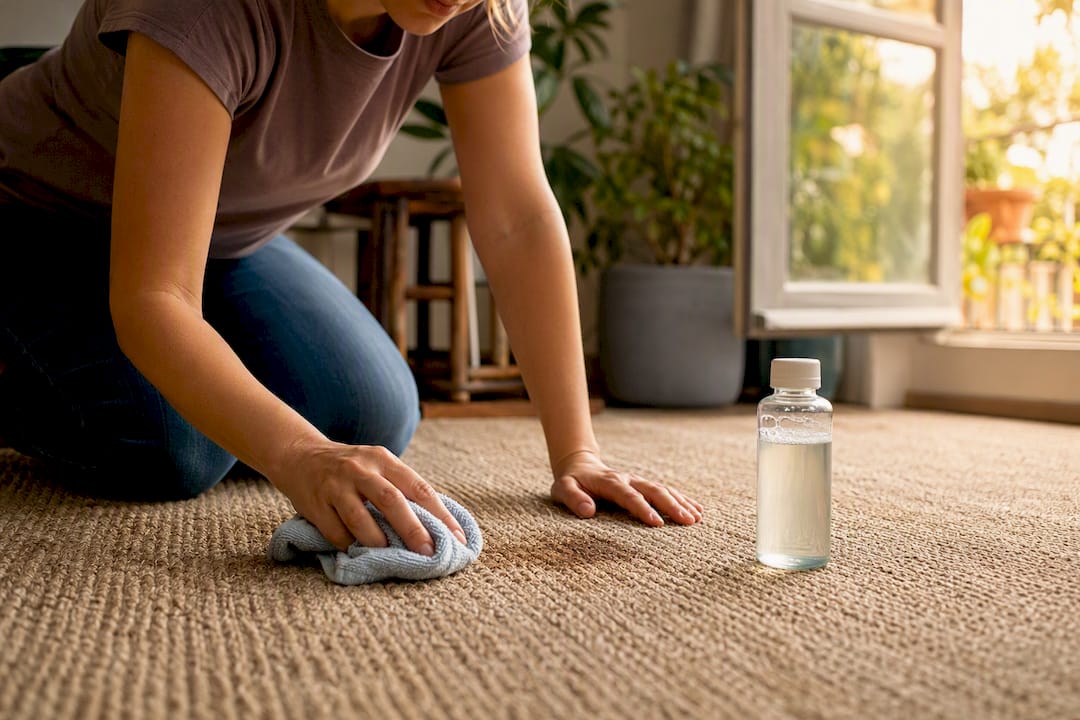
Deep-clean hard surfaces. Wipe down counters, floors, walls, and trim with a cleaner suited to the surface and the odor. Grease on kitchen surfaces needs a degreaser, not glass cleaner. Pet accidents on tile need an enzyme cleaner, not just soap and water, because enzymes actually break down the uric acid crystals that regular cleaners leave behind.
-
Apply absorbers and neutralizers, and let them work. Baking soda on carpet needs to sit for a prolonged period before vacuuming to effectively absorb odors. Activated charcoal needs open airflow around it to keep pulling odor molecules from the air, so don’t tuck it in a sealed cabinet. Give any product the full dwell time listed on the label; pulling it up early is the most common reason people think baking soda “doesn’t work.”
-
Dry the room completely. Odors return fast in damp conditions, so run a fan or a dehumidifier until surfaces and fabrics are fully dry. This is the step people skip most often, and it’s why a “cleaned” room smells musty again within 48 hours.
-
Recheck after 24 hours. Walk back into the room with fresh senses, ideally after being outside for a few minutes. If the smell is gone, you’re done. If it’s fainter but present, you likely found a secondary source, not the primary one.
Pro Tip: Check your HVAC filter before you blame the room. A filter that’s overdue for a change recirculates cooking, pet, and mildew odors through every connected room in the house, so a “fixed” room can smell bad again simply because the air handling system is redistributing the smell from somewhere else.
How to Get Rid of Specific Bad Smells in a Room
Different odors need different first moves. Treating a smoke smell like a pet smell wastes time and often makes things worse, so match the fix to the source.
| Odor Type | Immediate Action | Deeper Fix |
|---|---|---|
| Pet urine/accidents | Blot fresh spots, do not scrub | Enzyme cleaner applied per label, repeat on old stains |
| Smoke (cigarette or fire) | Ventilate heavily, wash fabrics | Deep-clean or replace heavily saturated soft goods |
| Cooking/grease | Run exhaust hood, wipe hard surfaces | Degrease vents, hood filter, and nearby cabinets |
| Musty/mildew | Run fans, open windows | Dehumidify, fix any moisture source, inspect for mold |
| Garbage/sewer gas | Remove trash, check drain traps | Pour water in unused drains; call a plumber if it persists |
Pets: confirm the actual location of old urine stains with a black light before treating, since the visible stain and the true saturation point often differ by a few inches.
Smoke: thirdhand smoke residue settles into fabric fibers and surfaces and can be genuinely difficult to remove. Lab research from Lawrence Berkeley National Laboratory found these residues persist on surfaces long after the smoke clears, which is why heavy smoke exposure often calls for washing everything washable and considering replacement for anything that can’t be cleaned.
Cooking and grease: confirm the smell is coming from the hood filter, not the food itself, by removing the filter and smelling it directly. A grease-saturated filter keeps recirculating odor no matter how clean the stove is.
Musty and mildew: isolate the room for an hour with the door closed, then check if the smell is stronger near a wall, window, or floor, which usually points to a moisture problem rather than a general staleness issue.
Garbage and sewer: if the smell tracks back to a drain rather than the trash can, it’s often a dry P-trap rather than an actual sewer issue. Pour a cup of water down any drain you rarely use.
Do not attempt DIY removal on visible mold growth larger than about 10 square feet. EPA mold guidance and the CDC’s mold FAQ both draw the line at small, contained areas for homeowner cleanup and recommend professional remediation for anything larger or hidden behind walls.
Neutralizing vs. Masking: Which Deodorizing Method Actually Works?
A masking agent adds fragrance on top of an existing smell. A neutralizer changes the chemistry of the odor molecule itself, which is why one lasts and the other doesn’t. Industry experts point out a common tell: if you can smell both the perfume and the underlying odor at the same time, the product is masking, not solving anything, and Cleanlink’s analysis notes that true elimination leaves a room smelling neutral, not perfumed. Byers Scientific frames the same distinction as a long-term versus short-term fix: neutralization solves the problem, masking buys you a few hours.
Natural neutralizers worth keeping on hand:
- Baking soda: absorbs acidic odor compounds on carpet, upholstery, and inside the fridge; needs hours of contact time to work.
- White vinegar: cuts through grease and neutralizes alkaline odors like fish or dairy; never mix it with bleach, which produces toxic chlorine gas.
- Activated charcoal: pulls odor molecules from the air passively; works best in closets, cars, and small enclosed spaces rather than open rooms.
- Enzyme cleaners: break down organic waste at a molecular level, making them the right call for pet urine, vomit, and other biological stains.
- Hydrogen peroxide: useful on tough organic stains, but always spot-test on fabric first since it can lighten color.
For ongoing air quality rather than one-time spot treatment, an air purifier with an activated-carbon filter does more than a standard HEPA unit, since HEPA filters trap particles but don’t absorb odor gases the way carbon does.
Pro Tip: Skip scented “odor eliminator” sprays for a musty basement or damp closet. Fragrance molecules mix with mildew smell rather than replacing it, which often produces a stronger, more chemical version of the original problem.
Cleaning Carpets, Upholstery, and Mattresses the Right Way
Porous materials trap odor molecules deep inside their fibers, which is why a quick surface wipe rarely fixes a fabric smell. Treat soft surfaces with more patience than hard ones.
- Vacuum thoroughly before applying any powder or spray, since trapped debris blocks the treatment from reaching the fibers underneath.
- Sprinkle baking soda generously over carpet or upholstery and let it sit for at least several hours, ideally overnight, then vacuum it up completely.
- For mattresses, strip all bedding, apply baking soda, let it sit for a few hours in a ventilated room, and vacuum with an upholstery attachment.
- Check the Top Cleaners Dublin carpet maintenance guide for deeper fiber-care techniques if your carpet sees heavy foot traffic.
- Steam cleaning or professional extraction is the right call when baking soda alone doesn’t fully clear the smell, especially on rugs and upholstery that can’t be easily removed for treatment.
- Deeply saturated pet urine or heavy smoke permeation in cushions, mattresses, or padding often means replacement is cheaper and more effective than repeated treatment.
Controlling Moisture So the Smell Doesn’t Come Back
Musty odors are almost always a humidity problem wearing a smell as a symptom. Fix the moisture and the smell usually stops returning on its own.
- Run bathroom exhaust fans for about 20 minutes during and after showers to keep fungal growth from taking hold, a step Consumer Reports specifically recommends.
- Run a dehumidifier in basements or crawl spaces and aim to keep indoor humidity below roughly 60%.
- Fix leaking pipes, roof damage, or window seals as soon as you spot them rather than waiting for a visible stain.
- Dry any wet carpet, drywall, or fabric within 24 to 48 hours to prevent mold from establishing itself.
Pro Tip: A $15 hygrometer tells you more than your nose does. Place one in a basement or closet you suspect runs damp, and check it weekly. If it consistently reads above 60%, that space needs a dehumidifier before it needs another cleaning. For mold growth beyond a small, contained patch, follow EPA’s mold remediation guidance and bring in a professional.
When Should You Call a Professional for Room Odors?
DIY methods handle most household smells, but certain warning signs mean it’s time to bring in a professional rather than trying another round of baking soda. Watch for a smell that returns within a day or two of cleaning, any hint of sewer gas indoors, visible mold larger than a small patch, smoke odor that’s soaked into walls or large furniture, or pet urine that’s saturated padding or subflooring.
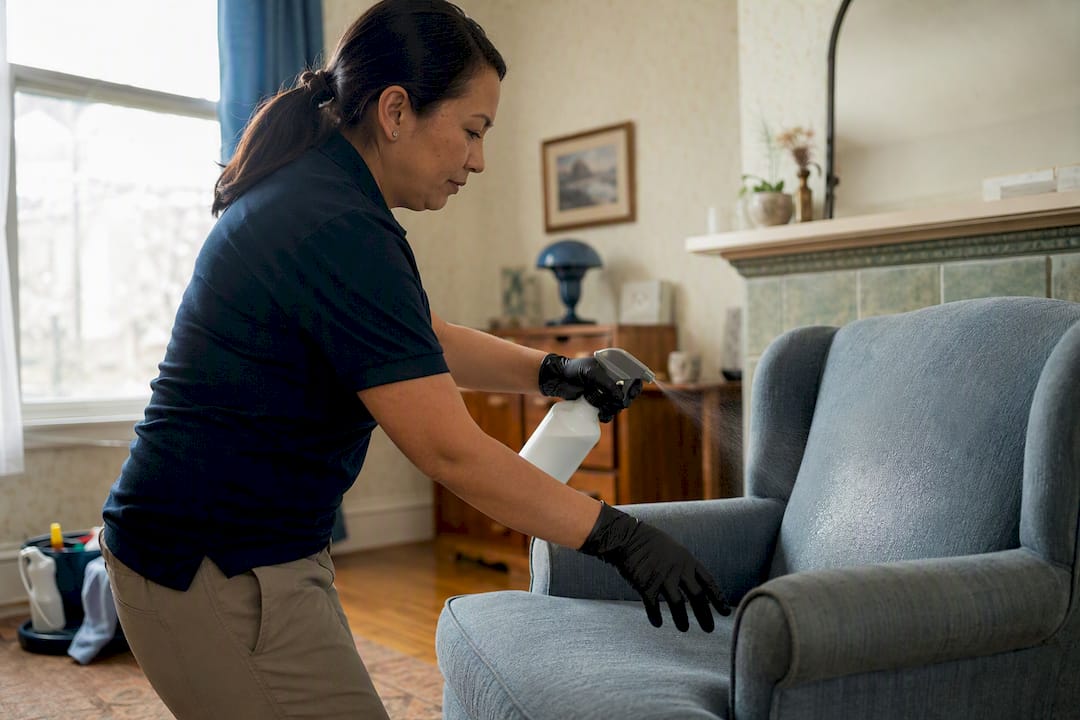
Professional cleaners bring tools most households don’t have on hand: deep carpet and upholstery extraction, enzyme-based treatments applied at commercial strength, and the experience to spot a moisture source a homeowner might miss entirely. Before booking anyone, ask what products they use for odor removal (neutralizers versus scented masking agents), whether they inspect for the underlying moisture or contamination source, and what happens if the smell returns after the visit.
If you’re weighing whether your situation calls for a light touch-up or a full deep clean checklist, the persistence of the smell after your own cleaning attempt is usually the clearest signal. And if you’re noticing odor alongside other clutter or grime building up around the house, it may be one of several signs you need a house cleaner sooner rather than later.
Safety Rules for Deodorizing Any Room
A few common DIY habits do more harm than good, and some are genuinely dangerous. Keep these in mind before you start mixing anything.
- Never mix bleach and vinegar or bleach and ammonia. The combination produces toxic chlorine gas, and bleach plus ammonia-based cleaners creates chloramine vapors that can cause serious respiratory harm.
- Avoid heat on unidentified stains. Heat can permanently set organic stains like blood or pet urine into fabric fibers before you’ve identified what you’re dealing with.
- Be careful with aerosolized solvents in enclosed spaces. Poor ventilation while using strong chemical sprays can cause dizziness, headaches, or worse with prolonged exposure.
- Watch essential-oil sprays around pets and allergy sufferers. Some essential oils are toxic to cats and dogs, and strong fragrances can trigger asthma or allergic reactions in sensitive people.
- Never use combustion devices like charcoal grills or generators indoors to “air out” a room. This creates a real carbon monoxide poisoning risk that has nothing to do with how effective it might be at odor control.
An Insider’s Take on Finding Stubborn Odors
The isolation trick works better than anything you’ll find in a spray bottle. Close the door on the suspected room for an hour, leave, then walk back in with a clear nose. Nine times out of ten, the smell you were chasing through the hallway was never the hallway’s problem at all. Most callbacks happen because someone treated the smell instead of the source.
If You’d Rather Hire It Out, Here’s What a Professional Cleaning Handles
Some odors are worth the DIY route, and some just aren’t worth another weekend of your time. Octomaids is the alternative to spending another Saturday scrubbing and re-scrubbing a smell that keeps creeping back, because our teams treat odor as a symptom to diagnose, not a smell to cover up.
A professional deep clean covers the spots most DIY attempts miss: behind and under appliances, inside vents, deep in carpet fibers, and along baseboards where grime and moisture collect unnoticed. If you’re dealing with a persistent kitchen smell, a rental appliance cleaning can clear grease buildup that’s been recirculating through your vents for months. If you’re prepping a property between tenants, a move-in/move-out clean tackles the accumulated odors a previous occupant left behind before they become your problem.
Before booking any cleaning service, ask whether they use neutralizing treatments or just fragrance sprays, whether the team is insured, and what their process looks like for odor-specific requests. Octomaids has served homeowners and businesses across Vancouver, WA and the Portland, OR metro area since 2006 with the same background-checked cleaners returning to your home every visit. If a room’s smell has outlasted your patience, request an estimate for a deep clean and let a professional team handle the parts of the house you can’t easily reach yourself.
Sources
- CR’s Guide to Eliminating Nasty Household Odors — Consumer Reports
- How to Deodorize Your Carpet Naturally With Baking Soda — The Kitchn
- Mold Remediation in Schools and Commercial Buildings – EPA (mold guide)
- Masking Odors vs Eliminating Odors — Cleanlink
FAQ
How do you deodorize an entire room?
Remove the odor source, ventilate for at least 20 to 30 minutes, deep-clean hard and soft surfaces with the right cleaner, then apply an absorber like baking soda or activated charcoal and let the room dry fully before rechecking.
What is the strongest odor eliminator?
Enzyme cleaners are among the most effective for organic odors like pet urine because they break down the waste molecules rather than just absorbing or covering them; baking soda and activated charcoal are strong, safe options for general household absorption.
How do I get rid of a bad smell in my room fast?
Open windows immediately, remove any trash or contaminated items, and spot-clean visible stains, then set out baking soda or activated charcoal while the room airs out; a full fix typically needs cleaning plus several hours of absorber contact time.
What is the hardest smell to get rid of in a house?
Heavy smoke odor and deeply saturated pet urine are widely considered the toughest, since both can penetrate porous materials like drywall, padding, and subflooring; a professional deep clean or targeted enzyme treatment from a service like Octomaids is often needed when DIY methods don’t fully clear them.