
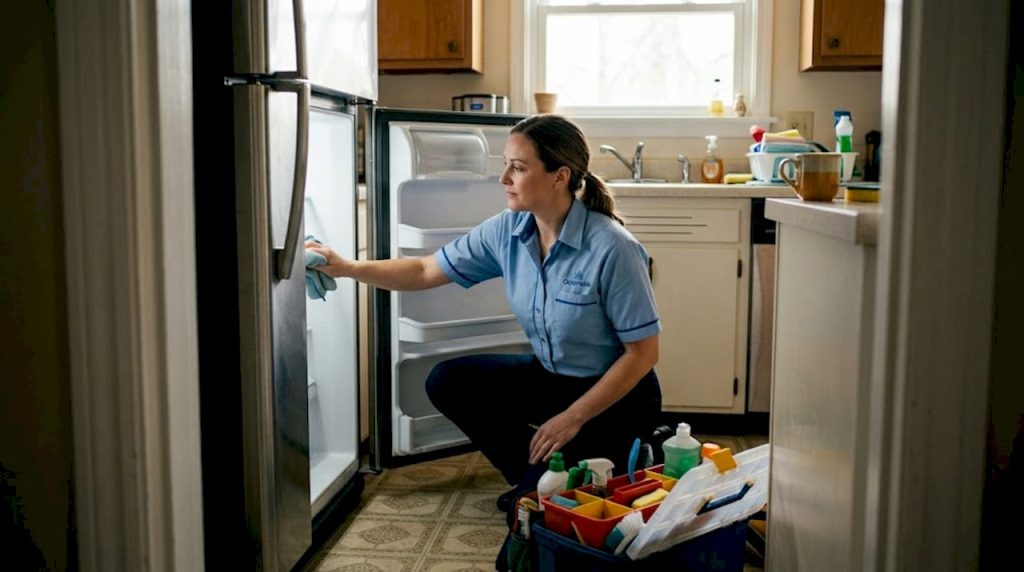


Dirty appliances are one of the fastest ways to lose a good tenant. When you manage rental properties, the condition of the refrigerator, washing machine, and oven communicates your standards before a tenant ever signs a lease. Knowing how to clean rental appliances professionally is not just about appearances. It directly affects tenant retention, appliance lifespan, and your bottom line. This guide walks property managers and landlords through everything from legal responsibilities and service selection to step-by-step cleaning expectations and how to verify results.
Table of Contents
- Key takeaways
- What to know before cleaning rental appliances professionally
- Step-by-step professional cleaning for key appliances
- Common challenges and how to handle them
- How to verify professional cleaning results
- My take on professional appliance cleaning for rentals
- Keep your rental appliances in top shape with Octomaids
- FAQ
Key takeaways
| Point | Details |
|---|---|
| Professional cleaning protects value | Scheduled expert cleaning extends appliance lifespan and reduces costly repair calls. |
| Know your legal obligations | Landlords are responsible for appliance repairs from normal wear; tenants handle basic cleaning tasks. |
| Frequency matters by appliance | Refrigerators need a deep clean every 3 to 4 months; washers and dryers need attention monthly. |
| Documentation prevents disputes | Photographing appliance condition before and after cleaning protects both landlords and tenants. |
| Professional methods go deeper | UV sterilization and coil vacuuming remove bacteria that routine tenant cleaning cannot reach. |
What to know before cleaning rental appliances professionally
Before you schedule a single service call, you need a clear picture of who is responsible for what. The legal and practical boundary between cleaning and repair is one of the most misunderstood areas in property management. Landlords must repair appliances broken through normal wear, while minor maintenance tasks like filter cleaning and lint trap emptying fall to tenants. Getting this wrong leads to disputes, damaged relationships, and surprise costs.
Your lease should spell this out clearly. Clear lease language about appliance maintenance responsibilities helps avoid disagreements that drag on for weeks. When tenants know they are expected to wipe down the microwave but you will handle the deep cleaning of the refrigerator coils, everyone operates with realistic expectations.
When selecting a professional cleaning service, look for these qualities:
- Appliance-specific experience. Not every cleaning company knows how to clean a condenser coil or safely remove a washing machine filter. Ask directly about their appliance cleaning process.
- Documented cleaning checklists. A reputable service provides a written record of what was cleaned and how, which protects you during tenant disputes.
- Insurance and bonding. Any professional entering your rental unit should carry liability insurance to cover accidental damage.
- Flexible scheduling. Look for services that can work around tenant schedules or during vacancy periods for minimal disruption.
- Proven track record with rental properties. Residential cleaning experience is good. Experience specifically with rental turnovers and occupied units is better.
On frequency, the guidance from cleaning experts is specific. Refrigerators need a deep clean every 3 to 4 months to maintain functionality, beyond the weekly wipe-down tenants should handle. Washing machines and dryers benefit from a professional service every one to two months, particularly in high-use units. Dishwashers and ovens should be professionally cleaned at every tenant turnover at minimum, and quarterly in long-term tenancies.
Step-by-step professional cleaning for key appliances
Understanding what a professional cleaning service should actually do for each appliance helps you evaluate their work and ask the right questions before hiring. Here is what to expect and request for each major appliance.
-
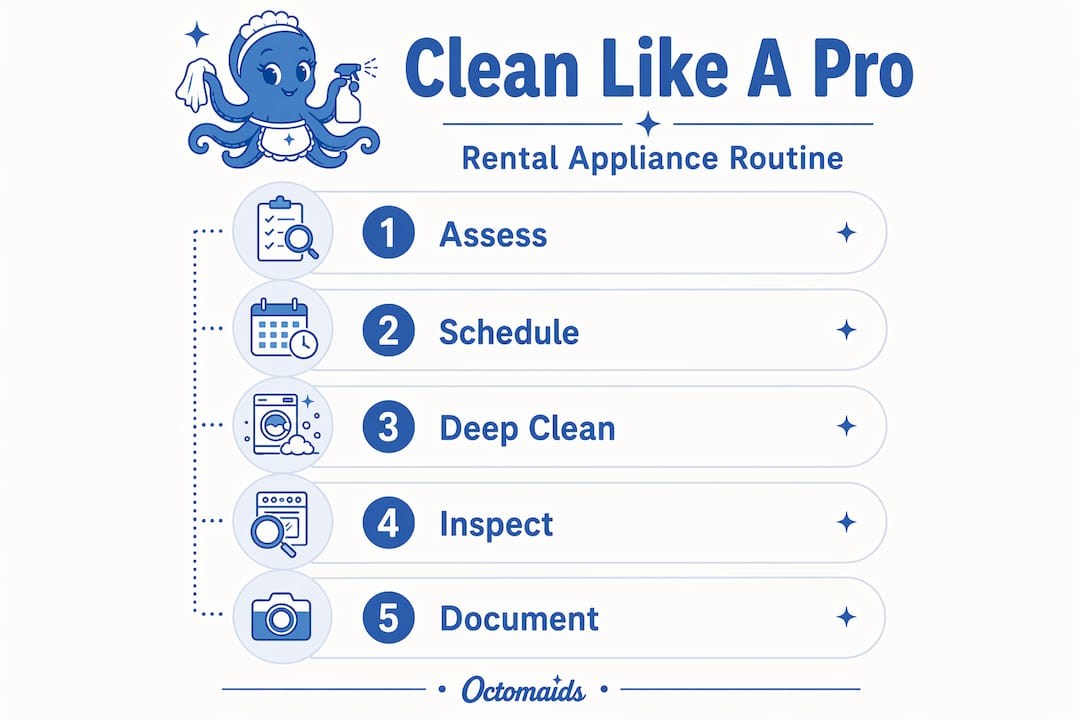
Pre-cleaning inspection and documentation. Before touching anything, a professional should photograph the current condition of each appliance. This creates a baseline record that protects you if a tenant later claims damage occurred during their tenancy.
-
Refrigerator cleaning. The interior shelves, drawers, and door seals get wiped down with food-safe sanitizing solution. The exterior gets cleaned including the top, which collects grease and dust. Vacuuming the condenser coils and wiping the door gaskets thoroughly are the steps most tenants skip entirely. These are also the steps that prevent the most mechanical failures.
-
Washing machine and dryer care. The washing machine drum gets a hot cycle with a cleaning agent to break down detergent residue and kill bacteria. The filter gets removed and cleaned manually. For dryers, the lint trap housing gets vacuumed beyond the screen, and the drum interior gets wiped. It is worth noting that self-cleaning cycles alone are not enough. Manual intervention is required to prevent mold and bacteria buildup in the drum and gasket.
-
Dishwasher deep cleaning. The spray arms get removed and soaked to clear mineral deposits from the jets. The filter at the base of the unit gets rinsed and scrubbed. The interior walls and door seal get sanitized, and a cleaning cycle runs with a dishwasher-specific cleaner.
-
Oven cleaning. Removable racks get soaked separately. The interior cavity gets treated with a degreasing agent and scrubbed. The door glass, both inside and out, gets cleaned. The burner grates on gas ranges get individually cleaned.
-
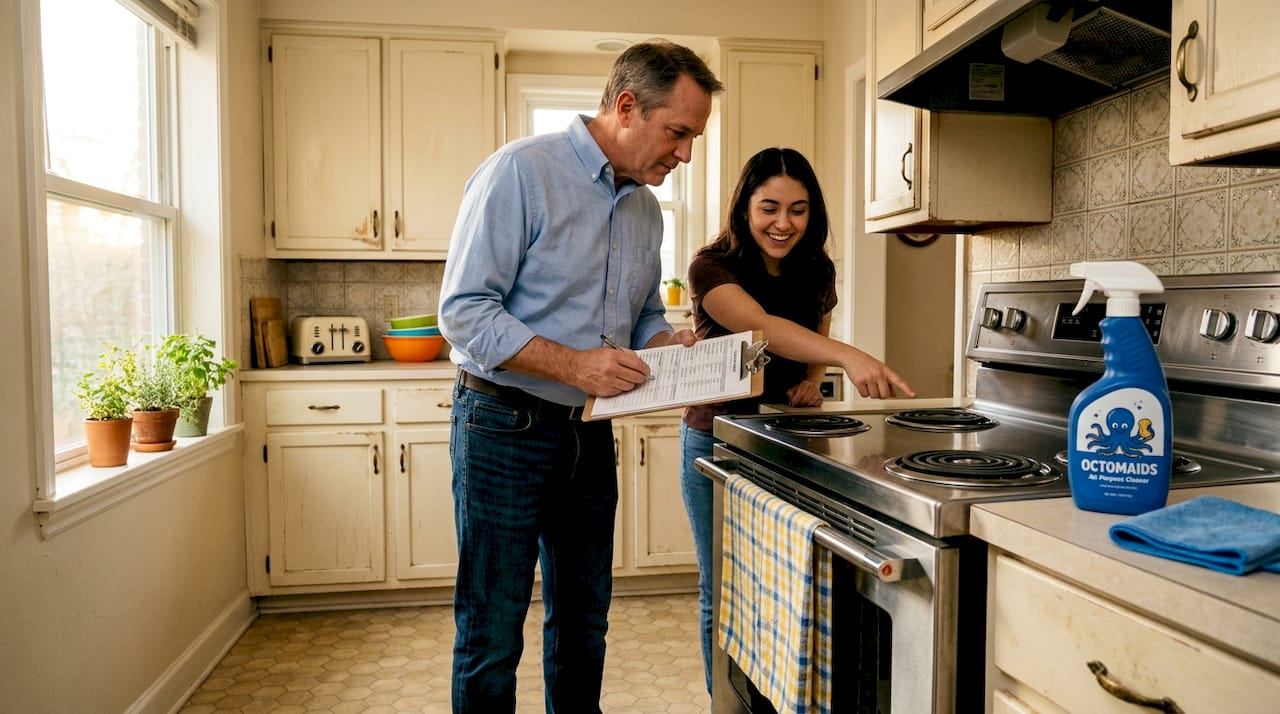
Post-cleaning inspection and sign-off. The professional should walk through each appliance with you or your property manager, confirm the work completed, and provide a written summary. This document becomes part of your property maintenance file.
| Appliance | Recommended professional cleaning frequency | Key tasks often missed by tenants |
|---|---|---|
| Refrigerator | Every 3 to 4 months | Condenser coil vacuuming, door gasket wiping |
| Washing machine | Monthly to every 2 months | Filter removal, drum gasket scrubbing |
| Dryer | Monthly to every 2 months | Lint housing vacuuming, drum interior wipe |
| Dishwasher | Every 1 to 2 months | Spray arm cleaning, base filter scrubbing |
| Oven | Every tenant turnover, quarterly otherwise | Door glass cleaning, burner grate scrubbing |
Pro Tip: Ask your cleaning service whether they use UV sterilization for appliance interiors. Major appliance brands now offer UV sterilization services with customer satisfaction ratings of 4.6 out of 5 stars, and this technology kills bacteria that cleaning solutions alone may not reach.
Common challenges and how to handle them
Even the best-planned cleaning schedule runs into friction. Here are the most frequent problems property managers face and how to work through them.
- Appliance damage discovered during cleaning. When a professional uncovers a failing door seal or a cracked drum during cleaning, that is actually good news. Catching it early costs far less than an emergency repair call after a tenant complaint. Document the finding with photos and schedule the repair before the next tenant moves in.
- Tenant non-cooperation. Some tenants resist allowing access for scheduled maintenance. Your lease should include language permitting entry with proper notice for maintenance purposes. Most resistance dissolves when tenants understand the cleaning benefits them directly.
- Persistent odors despite cleaning. Mold in washing machine gaskets and refrigerator drip pans can survive a single cleaning session. Regular professional maintenance prevents bacteria and musty odors from taking hold, but a severely affected unit may need two back-to-back sessions to fully resolve the problem.
- Electrical and water hazards. Professionals should always disconnect appliances before cleaning and confirm they are fully dry before reconnecting. This is non-negotiable and should be part of any service agreement you sign.
- Coordinating repairs alongside cleaning. The most efficient approach is to schedule your professional cleaning first, then use the post-cleaning inspection report to generate a repair list. This way, repairs target confirmed problems rather than guesses.
“Proactive communication and documentation help avoid surprise appliance repair bills in rentals. Tenants should report issues promptly with documentation to streamline repair and protect both parties from disputes.”
How to verify professional cleaning results
Knowing what clean actually looks like is how you hold a service accountable. After a professional session, here is what you should see and measure.
- Visual standards. Refrigerator interiors should have no residue on shelves or in drawers. Washing machine drums should have no visible discoloration or film on the gasket. Oven interiors should be free of carbon buildup and grease.
- Smell test. A professionally cleaned appliance should have no odor at all. Any lingering mustiness in a washer or sour smell in a refrigerator means the job is incomplete.
- Performance check. After cleaning, run each appliance through a cycle. The refrigerator should reach and hold temperature efficiently. The washer should complete a cycle without error codes. The dishwasher should drain cleanly.
- Documentation review. The cleaning service should hand you a checklist confirming every task completed. File this with your lease documentation for that unit.
Scheduling regular inspections on top of professional cleaning creates a maintenance rhythm that pays off. Scheduled professional cleaning reduces odors, prevents mold, and extends appliance lifespan, which means fewer replacement costs and fewer tenant complaints. For property managers running multiple units, a recurring service plan is the most cost-effective way to stay ahead of problems rather than reacting to them.
Pro Tip: Build appliance cleaning documentation into your move-in and move-out cleaning process. A timestamped cleaning report at each tenancy transition creates a paper trail that protects you from security deposit disputes.
My take on professional appliance cleaning for rentals
I have seen property managers handle appliance maintenance every way imaginable. The ones who rely entirely on tenants to keep appliances clean almost always end up paying more in the long run. Not because tenants are negligent, but because most people genuinely do not know that a washing machine filter exists, let alone how to clean one.
What I have learned is that the cost of professional appliance cleaning is almost always smaller than the cost of the problem it prevents. A dryer with a clogged lint housing is a fire risk. A refrigerator with dirty condenser coils runs harder and fails sooner. These are not hypothetical risks. They are the repair calls that hit your budget without warning.
My advice to any property manager considering whether professional cleaning is worth it: run the numbers on your last two appliance replacements and ask yourself whether a quarterly cleaning schedule would have extended their life. In my experience, the answer is almost always yes. Find a service you trust, build it into your maintenance calendar, and treat it the same way you treat your HVAC inspections. It is not optional maintenance. It is protection for your investment.
— Steven
Keep your rental appliances in top shape with Octomaids
If you manage rental properties in the Vancouver, WA or Portland, OR area, Octomaids has been the trusted name in professional cleaning since 2006. Our family-owned team specializes in exactly the kind of detailed, thorough work that keeps rental appliances performing at their best and tenants satisfied.
Whether you need a one-time deep clean between tenants or a recurring cleaning plan that keeps your units in consistent condition, we bring the same trusted cleaners to every visit. We serve Clark County, WA and the greater Portland Metro area with services designed specifically for property managers who hold their properties to a high standard. Explore our full range of professional cleaning services or reach out to request a quote tailored to your rental portfolio. Your appliances and your tenants will notice the difference.
FAQ
How often should rental appliances be professionally cleaned?
Refrigerators benefit from a deep clean every 3 to 4 months, while washing machines and dryers should be professionally serviced every one to two months. Ovens and dishwashers should be cleaned at every tenant turnover at minimum.
Who is responsible for cleaning appliances in a rental property?
Landlords handle repairs from normal wear and tear, while tenants are generally responsible for routine cleaning tasks like wiping surfaces and cleaning lint traps. Clear lease language prevents disputes over where that line falls.
Can tenants clean rental appliances themselves instead of using professionals?
Tenants can handle surface cleaning, but self-cleaning cycles alone do not eliminate bacteria and mold buildup in gaskets, filters, and coils. Professional cleaning reaches the components that routine tenant maintenance cannot.
What should I look for after a professional appliance cleaning?
Check for no residual odors, visually clean interiors with no grease or film, and confirm each appliance runs through a full cycle without errors. The service should also provide a written checklist of completed tasks for your records.
Does professional appliance cleaning reduce repair costs?
Yes. Proactive documentation and cleaning catch developing issues before they become expensive failures, and regular maintenance extends appliance lifespan significantly, reducing both replacement frequency and emergency repair bills.