


Unplug the iron, let it cool completely, and empty the water reservoir before touching the soleplate. For most gummy or burned starch residue, a 2:1 baking soda-to-water paste applied to the cool plate works reliably. Melted polyester or plastic responds better to a heat-assisted method: iron over a damp cotton cloth while the plate is hot to lift the material. Mineral scale clogging the steam vents calls for a diluted vinegar and distilled water flush, always following your iron’s manual first.
Match your residue to the right method before you start:
- Burned starch or gummy buildup: baking soda paste on a cool plate
- Melted polyester or plastic: heat-assisted damp cotton cloth, then cool wipe
- Mineral scale in steam vents: vinegar and distilled water steam flush
Pro Tip: Our team at Octomaids always tells clients to empty the reservoir after every single use. That one habit cuts mineral buildup dramatically and keeps you from needing a deep descale every few weeks.
Key Takeaways
Matching your cleaning method to the type of residue on the soleplate is the fastest path to a clean, gliding iron without coating damage.
| Point | Details |
|---|---|
| Safety first, always | Unplug, cool completely, and empty the reservoir before any cleaning method. |
| Match method to residue | Baking soda paste for starch/burns; damp cloth heat-lift for melted polymer; vinegar flush for mineral scale. |
| Protect steam vents | Use cotton swabs only; never metal probes; always finish with a steam flush over a towel. |
| Prevent with distilled water | Switching to distilled water after descaling stops the mineral deposit cycle from restarting. |
| Clean on a schedule | Daily users should clean monthly; occasional users need a full clean and descale twice a year. |
Table of Contents
- What safety steps should you take before cleaning an iron soleplate?
- What materials do you need to clean an iron soleplate?
- How to remove burned or gummy residue with baking soda and home remedies
- How do you safely remove melted plastic or polyester from a soleplate?
- How do you descale steam vents and remove mineral deposits?
- When should you use a Magic Eraser or commercial soleplate cleaner?
- Final rinse and test run before ironing clothes again
- Routine maintenance to keep the soleplate clean longer
- When should you call a professional or replace the iron?
- What professional cleaners actually notice about iron maintenance
- Sources
- FAQ
What safety steps should you take before cleaning an iron soleplate?
Unplug the iron and let the soleplate cool completely before any cleaning attempt. A hot plate can cause burns, and residual internal pressure in a steam iron can send water splashing when you open the reservoir. Mineral deposits also shift and spread when the plate is warm, making them harder to remove cleanly.
Manufacturer cautions from Rowenta and Breville are consistent on this point: metal scrapers and harsh solvents can permanently damage coatings and internal parts, and in some cases void the warranty. Before using any solvent or descaling product, check your iron’s manual. Some models explicitly permit methylated spirits; others forbid it entirely.
Quick safety checklist before you begin:
- Unplug the iron and wait until the soleplate is room temperature
- Empty the water reservoir fully
- Read the manufacturer manual for model-specific restrictions
- Test any cleaning method on a small, inconspicuous area first
- Work in a ventilated space if using commercial cleaners or solvents
What materials do you need to clean an iron soleplate?
The minimum kit covers most residue types without risking damage to the plate’s coating. Gather these before you start:
| Item | Best used for | Notes |
|---|---|---|
| Baking soda | Burned starch, gummy residue | Mix 2:1 with water to form a paste |
| Distilled white vinegar | Descaling steam vents | Dilute with distilled water |
| Distilled water | Reservoir flushing, rinsing | Prevents new mineral deposits |
| Microfiber cloths | Wiping soleplate, final rinse | Soft enough for all coatings |
| Cotton swabs | Clearing steam vent holes | Never substitute with metal |
| Soft-bristled toothbrush | Working paste around vents | Gentle scrubbing only |
| Mr. Clean Magic Eraser | Stubborn surface residue | Test gently; abrasion risk on coated plates |
| Mild dish soap | Light scuffs, general grime | Dilute with water |
| Salt + dry cotton towel | Starch buildup (hot method) | Monitor heat carefully |
For steam vent work specifically, distilled water and cotton swabs are your safest tools. The baking soda paste and Magic Eraser handle soleplate surface residue. If your manual permits solvents, methylated spirits can be used as a last resort on a cool plate, but confirm this in your model’s instructions before applying. You can also find quality irons with detailed care specs, like the Rowenta DA1560, which list approved cleaning methods directly in the product documentation.
How to remove burned or gummy residue with baking soda and home remedies
A 2:1 baking soda-to-water paste is the go-to method for most burned starch or gummy buildup on a cooled soleplate, as recommended by both Iowa State University Extension and Martha Stewart. More stubborn marks may need a commercial hot-iron paste or a vinegar wipe.
Baking soda paste method (step by step):
- Mix two parts baking soda with one part water to form a thick paste.
- Apply the paste to the cool soleplate using a soft cloth or your fingers, avoiding the steam holes.
- Rub gently in circular motions, focusing on stained areas.
- Wipe away the paste with a clean, damp microfiber cloth.
- Use a cotton swab to clear any paste residue from steam vent holes.
- Test the iron on a scrap piece of fabric before using it on clothes.
Pro Tip: Keep the paste away from steam holes entirely. If paste gets inside the vents, it can flush onto your clothes the next time you use steam. Cotton swabs after every paste clean are non-negotiable.
For lighter scuffs, a small amount of non-gel toothpaste or diluted mild dish soap applied with a soft cloth works well. The salt and dry cotton towel method (heat the iron to medium, pour salt onto a dry cotton towel, and iron over it) can lift starch buildup quickly, but watch the heat setting and keep steam off during this step. Commercial hot-iron cleaning pastes and disposable cleaning cloths are also effective for dissolving fusing residue on a warm plate; follow the product instructions and keep paste clear of vents.
How do you safely remove melted plastic or polyester from a soleplate?
If polyester or plastic has melted onto the soleplate, the heat-assisted method carries the least risk of scratching the coating. Breville’s support guidance recommends ironing over a damp cotton cloth while the plate is hot to lift the melted material, then finishing with a cool wipe.
Controlled-heat method:
- Heat the iron to a low-medium setting.
- Place a damp cotton cloth flat on your ironing board.
- Iron back and forth over the damp cloth. The heat softens the polymer and the cloth picks it up.
- Lift the iron and check the cloth and plate. Repeat until the residue transfers.
- Unplug and let the iron cool fully before wiping the plate clean.
The cold method works for thicker plastic deposits: press an ice cube against the residue to harden it, then use a blunt plastic scraper or an old credit card to coax the brittle material away. Never use a metal scraper or knife at any stage. If residue remains after both approaches, a commercial hot-iron paste is the next step. Escalating to abrasive pads risks permanent coating damage, so stop before that point and consider a professional assessment.
How do you descale steam vents and remove mineral deposits?
Routine use of distilled water is the single most effective way to prevent limescale in steam vents. When deposits have already formed, a vinegar and distilled water mix flushed through the reservoir clears them, provided you follow your iron’s manual on descaling.
Home Depot’s descaling guide lists 1/4 cup white vinegar combined with 3/4 cup distilled water as a common and practical mix.
| Vinegar:water ratio | When to use | Source note |
|---|---|---|
| 1/4 cup vinegar + 3/4 cup distilled water | Moderate limescale, routine descale | Home Depot |
| Equal parts vinegar and distilled water | Heavy buildup, stubborn deposits | General cleaning guidance |
Steam-flush descaling sequence:
- Empty the reservoir completely.
- Add the vinegar and distilled water mix (check your manual confirms this is permitted).
- Plug in the iron and heat to a medium steam setting.
- Hold the iron over an old towel and press the steam button in short bursts until the reservoir empties.
- Empty any remaining solution and refill with plain distilled water.
- Steam through the distilled water over the towel to flush out vinegar residue.
- Repeat the distilled water flush once more if the steam smells of vinegar.
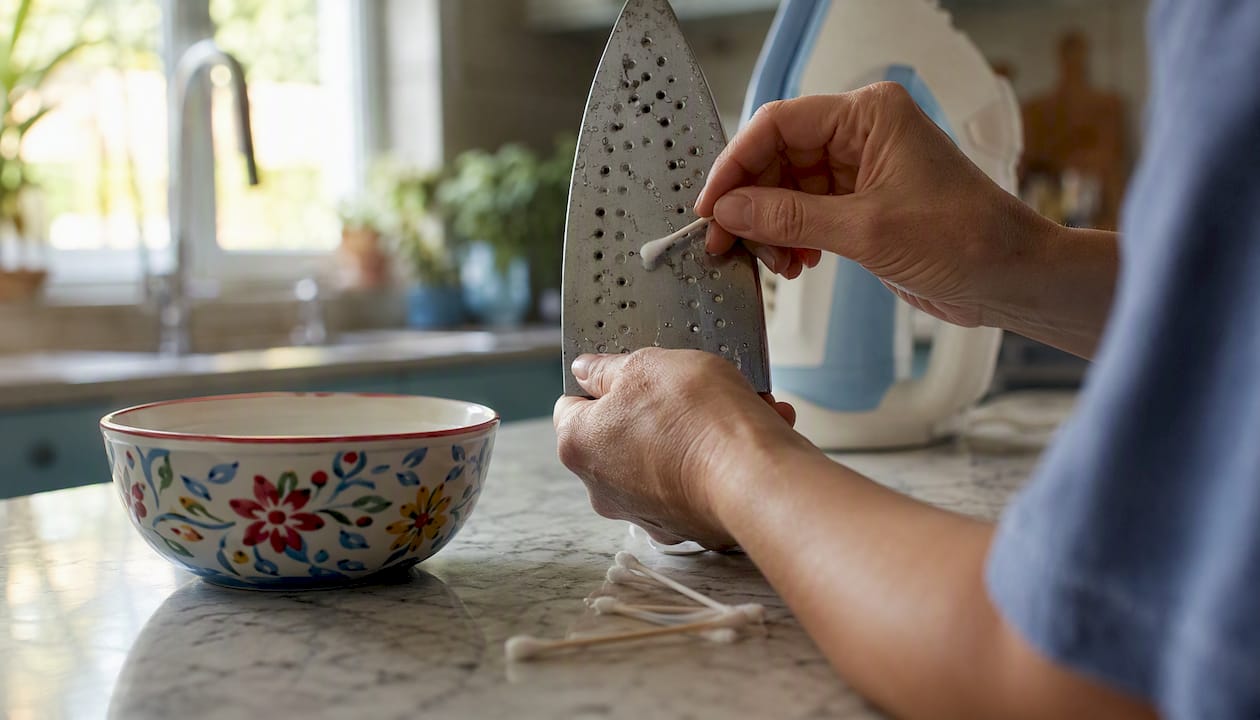
For the vent holes themselves, use cotton swabs or a soft-bristled toothbrush to clear visible buildup. Never insert metal probes or toothpicks into the holes. After clearing, run a steam flush over a towel to push remaining particles out of the vents.
Pro Tip: Once you’ve descaled, switch to distilled water permanently. Tap water re-deposits minerals with every use, so the descaling cycle just repeats unless you change the water source.
When should you use a Magic Eraser or commercial soleplate cleaner?
A melamine sponge like Mr. Clean Magic Eraser can remove stubborn residue that paste methods leave behind, but it carries an abrasion risk on coated plates. The Spruce recommends testing gently on a small area first, since manufacturer cautions about abrasive damage still apply even with a “soft” sponge.
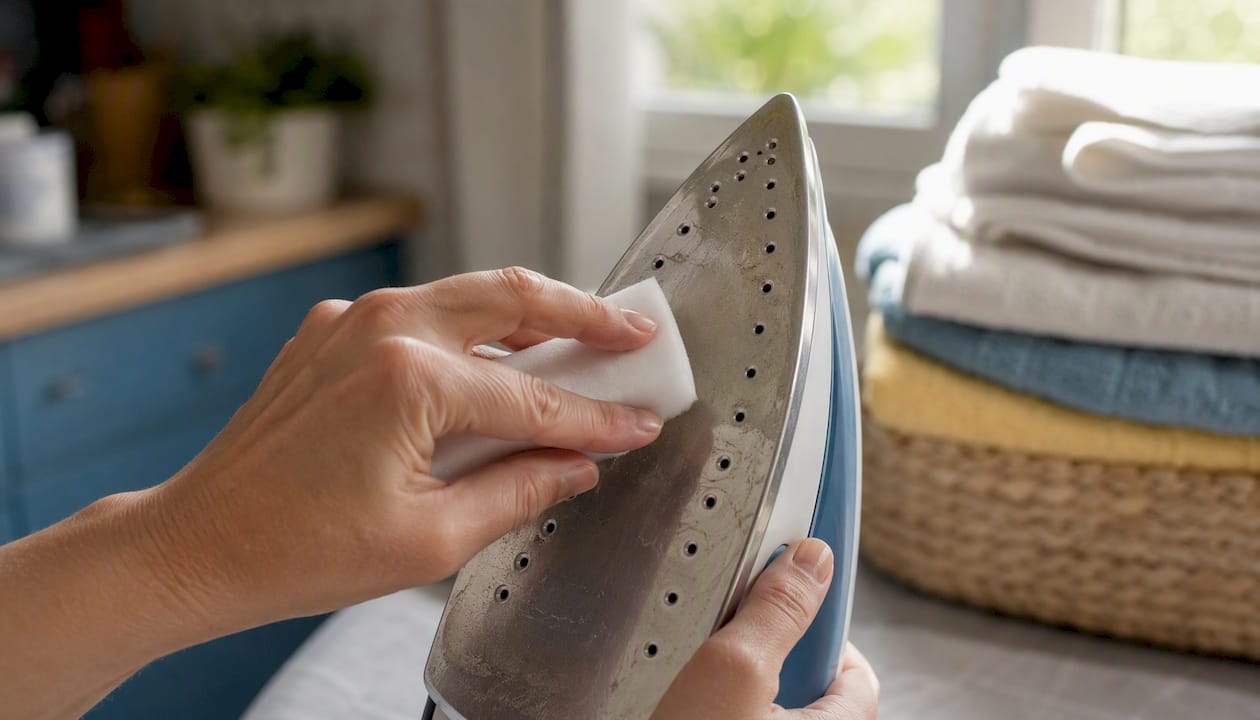
Dampen the Magic Eraser lightly, then rub the cool soleplate in gentle, short strokes. Wipe the plate clean with a damp microfiber cloth afterward, then run a steam flush to clear any particles from the vents.
For commercial hot-iron pastes, work in a ventilated area and follow the product’s instructions closely. Methylated spirits, where the manual permits, can be applied with a soft cloth to a cool plate for residue that resists other methods. Skip the Magic Eraser entirely if your manual explicitly prohibits abrasive cleaners, which is common for nonstick-coated soleplates.
Final rinse and test run before ironing clothes again
Before putting the iron back to work on actual clothing, a short verification sequence confirms no cleaner or residue remains on the plate or in the vents.
- Wipe the entire soleplate with a clean, damp microfiber cloth to remove any remaining paste, vinegar, or cleaner.
- Refill the reservoir with distilled water.
- Heat the iron and press the steam button over an old towel or blanket, watching for discolored water or particles in the steam.
- Empty the reservoir after the flush and let the iron cool.
- Wipe the soleplate dry with a clean microfiber cloth.
- Test-iron a hidden scrap of fabric to confirm no transfer of residue or discoloration.
If particles appear during the test run, repeat the steam flush and re-check the vents with cotton swabs before using the iron on good fabric.
Routine maintenance to keep the soleplate clean longer
Small, consistent habits prevent the kind of buildup that requires a full cleaning session. Martha Stewart’s guide recommends monthly cleaning for daily iron users and a couple of deep cleans per year for occasional users.
Maintenance schedule by usage:
- Daily user: wipe the cool soleplate after each session; full clean monthly; descale every 1–2 months
- Weekly user: wipe after each use; full clean every 2–3 months; descale seasonally
- Occasional user: wipe after each use; full clean and descale twice a year
Practical habits that reduce buildup:
- Empty the reservoir after every use to prevent mold and mineral deposits
- Use distilled water exclusively in the reservoir
- Store the iron upright, never face-down on the soleplate
- Use a pressing cloth when ironing over zippers, decals, or synthetic fabrics
- Avoid excessively high heat settings on delicate fabrics to reduce the chance of melting fibers onto the plate
For general home maintenance routines that include appliance care, small habits compounded over time make a real difference in how often you need to deep clean anything.
Pro Tip: Keep a small microfiber cloth and a few cotton swabs in your laundry area. A 30-second wipe after the iron cools is far easier than a 30-minute cleaning session later.
When should you call a professional or replace the iron?
Some problems go beyond what a cleaning session can fix. Seek professional help or replace the iron if you notice any of these warning signs after cleaning:
- The iron emits a burning smell from internal components, not just surface residue
- Steam or water comes out rusty, black, or discolored even after multiple flushes
- Steam vents remain clogged after repeated descaling attempts
- The iron leaks water onto clothing during normal use
- Electrical components feel hot to the touch outside the normal heating area
- The soleplate coating is visibly scratched, chipped, or flaking
Internal corrosion and electrical issues are not DIY problems. Continuing to use a compromised iron risks damaging clothing and, more seriously, creating a fire or electrical hazard. If DIY cleaning attempts have involved metal scrapers or harsh solvents, check your warranty status before contacting the manufacturer.
For appliance cleaning that’s part of a larger move-out or deep clean, professional appliance cleaning covers the kind of thorough work that goes beyond a quick wipe-down. The Octomaids team in Vancouver, WA and Portland, OR can handle the cleaning tasks that fall outside a normal routine, so you can focus on what matters.

If you’d rather hand off the heavy cleaning work entirely, Octomaids’ residential cleaning services cover everything from recurring maintenance to one-time deep cleans across Clark County, WA and the Portland Metro area.
What professional cleaners actually notice about iron maintenance
Most people clean their iron only after something goes wrong: a brown streak on a white shirt, steam that sputters instead of flows, or a plate that drags instead of glides. By that point, the buildup has usually been accumulating for months. The fix is rarely complicated, but it takes longer than it would have with a little routine attention.
What I see consistently, both in our own work at Octomaids and in the homes we clean, is that the reservoir habit is the one that makes the biggest difference. Tap water left sitting in a reservoir between uses deposits minerals with every heat cycle. Distilled water and a quick empty after each session break that cycle entirely. The soleplate stays cleaner, the vents stay clear, and the iron lasts longer.
If you’re preparing for a move or a deep clean and want appliance care handled as part of a larger job, our team at Octomaids covers cleaning tasks worth outsourcing for homeowners in Vancouver, WA and the Portland Metro area.
Sources
These are the primary references used to build this guide. When in doubt about your specific model, search for your iron’s model number plus “manual” and follow its descaling and solvent instructions first.
- How to Clean an Iron Safely (Including Descaling) | Step-by-Step Guide by Rowenta
- Cleaning Your Iron • AnswerLine • Iowa State University Extension and Outreach
- Breville – How do I clean my iron (support article)
- How to Clean an Iron • Martha Stewart
- How To Clean An Iron • The Home Depot
- How to Clean an Iron • The Spruce
FAQ
How do you clean a burnt iron soleplate?
Apply a 2:1 baking soda-to-water paste to the cool soleplate, rub gently with a soft cloth while avoiding the steam holes, then wipe clean with a damp microfiber cloth and follow with a steam flush over an old towel.
How do I get the black stuff off the bottom of my iron?
Black residue is usually burned starch or melted synthetic fiber. A baking soda paste handles most starch buildup; for melted polymer, iron over a damp cotton cloth while the plate is hot to lift the material, then wipe clean once cool.
Will a Magic Eraser clean an iron soleplate?
Yes, a dampened Mr. Clean Magic Eraser can remove stubborn residue, but test it gently on a small area first. Manufacturers caution that the abrasive action of a melamine sponge can wear coatings on nonstick or ceramic soleplates over time.
How do you get brown sticky stuff off an iron?
Brown sticky residue is typically burned starch or fabric sizing. Rub a 2:1 baking soda paste onto the cool plate with a soft cloth, wipe away with a damp microfiber cloth, then clear the steam vents with cotton swabs and run a steam flush to remove any remaining residue.
How often should you clean an iron soleplate?
Frequent users should clean their iron regularly, with deeper cleanings and descaling performed periodically; occasional users benefit from a couple of thorough cleans and descales annually, alongside wiping after every use.