
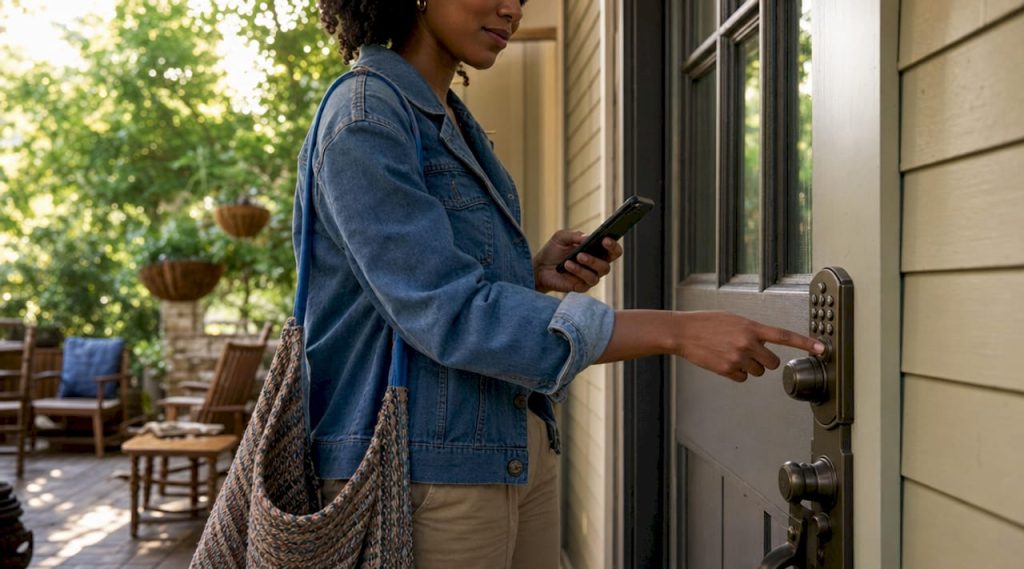


Professional cleaning services handle home access through secure, standardized entry protocols that allow cleaners to enter your home without you being present, using smart locks, lockboxes, or scheduled key handoffs. This approach, known in the industry as unattended access management, gives homeowners and property managers full control without requiring them to rearrange their schedules around every cleaning appointment. Most professional cleaning companies use at least one of three core methods: lockboxes, smart locks, or managed physical key programs, each with distinct security trade-offs. Understanding how these systems work, and what your cleaning provider should be doing behind the scenes, is the foundation of a safe and stress-free arrangement.
How cleaning services handle home access: the main entry methods compared
The three primary home access methods used by professional cleaning services are smart locks, lockboxes, and physical key handoffs. Each one serves a different type of homeowner, and choosing the right method depends on how often you schedule cleanings, your comfort with technology, and your security priorities.
Smart locks
Smart locks are keypad or app-controlled devices installed on your front door that allow you to grant and revoke access remotely. You assign a unique entry code to your cleaning team, set the hours it works, and the lock logs every entry and exit with a timestamp. Digital credentials activate only during scheduled cleaning windows, which means a code given to your cleaner for Tuesday mornings will not work on a Saturday afternoon. This time-bound access is one of the strongest security features available to homeowners today.
Lockboxes
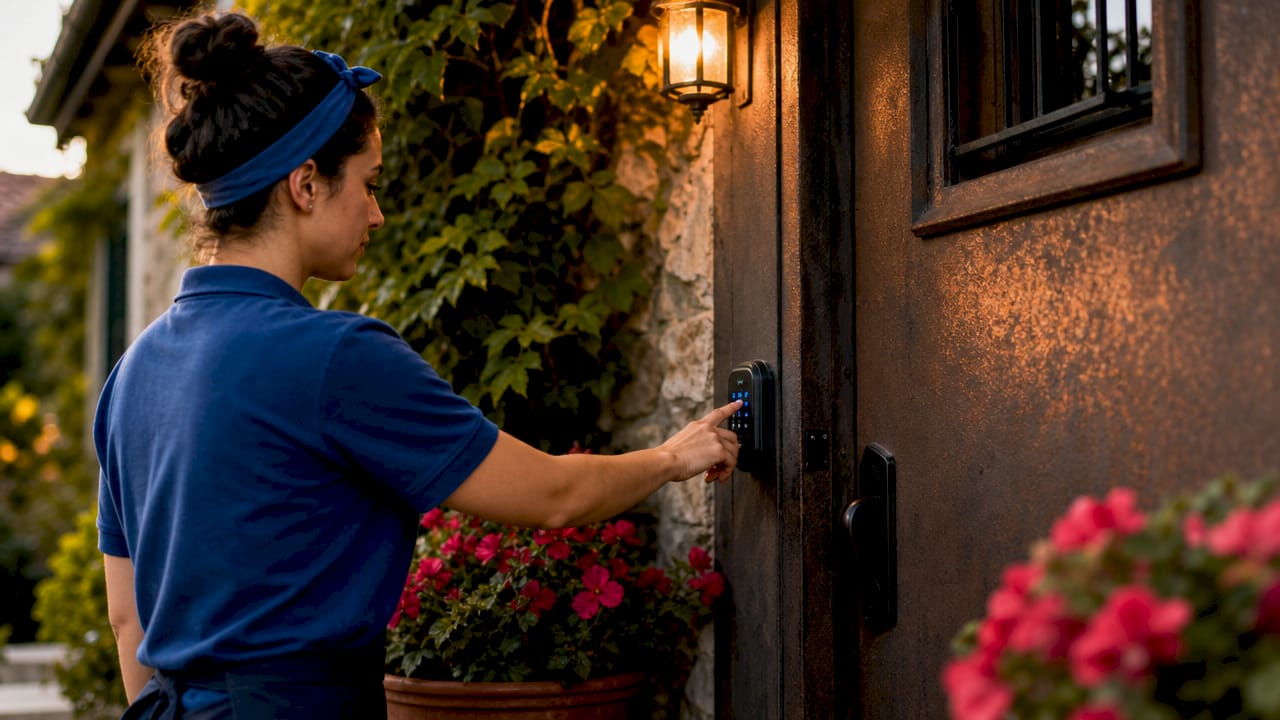
A lockbox is a small combination-secured box mounted near your door that holds a physical key. Your cleaning service receives the combination, retrieves the key before the appointment, and returns it afterward. Lockboxes are affordable and require no technology, but they carry one notable risk: the combination rarely changes between visits, which means access is not truly time-limited. For recurring appointments with a trusted provider, lockboxes are a practical middle ground.
Physical key handoffs
Some homeowners prefer to hand a physical key directly to their cleaning company, which stores it in a secure key management system. Reputable providers label keys with internal codes rather than addresses, so a lost key cannot be traced back to your home. Keys are never labeled with a street address, only with internal reference codes, which limits exposure if a key goes missing.
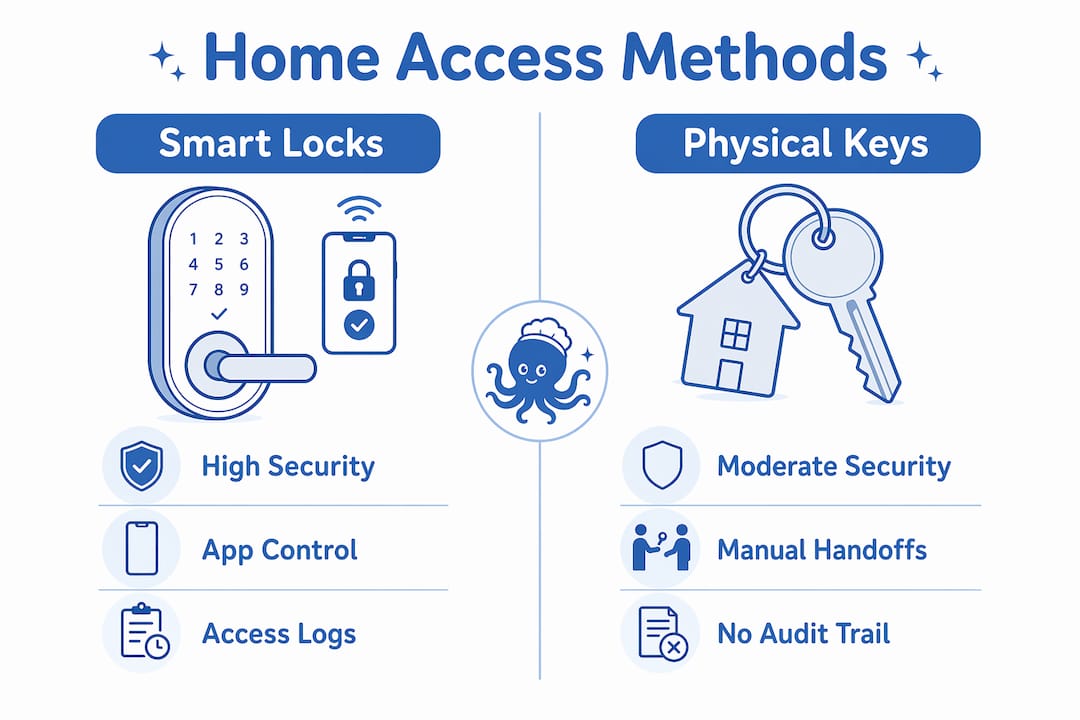
Here is a direct comparison of all three methods:
| Method | Security level | Convenience | Cost | Best for |
|---|---|---|---|---|
| Smart lock | High | Very high | $100 to $300+ | Recurring appointments, tech-comfortable owners |
| Lockbox | Medium | High | $20 to $60 | Occasional cleanings, low-tech preference |
| Physical key | Medium | Medium | Minimal | Long-term, trusted provider relationships |
Pro Tip: If you use a lockbox, change the combination at least every six months or immediately after any staff change at your cleaning company.
What procedures do professional cleaners follow on arrival?
Professional cleaning services use standardized arrival procedures, often called standard operating procedures (SOPs), to protect your home and establish accountability from the moment a cleaner steps through the door. Arrival SOPs typically include five to ten tasks completed within the first ten minutes of a visit, covering everything from verifying entry to documenting the condition of the home.
A well-run cleaning service follows a structured arrival sequence that looks something like this:
- Verify entry method. The cleaner confirms the correct access code, key, or lockbox combination before approaching the property.
- Check in digitally. Many services require cleaners to send a timestamped message or log entry through a mobile app when they arrive, creating a real-time record.
- Conduct a pre-cleaning walkthrough. On first visits especially, cleaners note any pre-existing damage, fragile items, or areas flagged by the homeowner.
- Photograph high-risk items. Pre-job quality gate procedures include photographing valuables or damaged surfaces on arrival to establish a clear baseline for any future damage claims.
- Secure pets. Cleaners confirm that pets are contained before beginning work, both for the animal’s safety and to avoid accidental escapes through open doors.
- Lock up on departure. The cleaner re-secures every entry point, returns any physical key to the lockbox, and sends a departure confirmation.
This sequence protects both you and the cleaning team. If a dispute ever arises about a broken item or a missing object, timestamped photos and digital check-ins provide objective evidence for both sides.
Pro Tip: Ask your cleaning provider to share their arrival SOP in writing before the first appointment. A company that cannot produce one is a company that has not thought carefully about accountability.
What security best practices should homeowners follow when granting cleaning access?
Granting access to your home is not a one-time decision. Security is a dynamic process that requires regular review, especially when staff changes occur at your cleaning company. The following practices give you meaningful control without creating friction for your cleaning team.
- Create individual credentials. Using unique codes per person rather than a single shared code allows you to revoke one cleaner’s access without affecting anyone else. This is the single most important smart lock practice for homeowners.
- Set access windows, not open-ended permissions. Program your smart lock to allow entry only during the scheduled cleaning window, such as 9 a.m. to 1 p.m. on Tuesdays. Access outside that window should be blocked automatically.
- Limit access scope. Grant entry to the front door only. There is no reason for a cleaning team to have garage codes, back door codes, or alarm override access unless your layout specifically requires it.
- Rotate codes after staff changes. When your cleaning company assigns a new team member to your home, request a code change immediately. Access codes should be rotated after any staff turnover to prevent former employees from retaining entry.
- Document your access rules in writing. Send your cleaning provider a brief written summary of your entry method, any alarm codes, pet instructions, and off-limits areas. This reduces misunderstandings and creates a reference point for both parties.
- Address indoor cameras openly. If you have security cameras inside your home, disclose their locations to your cleaning provider before the first visit. Many states have laws governing recording in private spaces, and transparency prevents conflict.
Pro Tip: Test your access method the day before a new cleaner’s first visit. A code that does not work on cleaning day creates delays, frustration, and a poor start to the relationship.
How do smart locks improve cleaning service access compared to traditional keys?
Smart locks represent a meaningful upgrade over physical keys for homeowners who schedule regular cleaning visits. The core advantage is accountability. Digital access logs verify arrival and departure times with user-specific IDs, giving you a clear record of every visit without any manual tracking.
Physical keys carry risks that are easy to underestimate. A key can be copied without your knowledge, lost without immediate detection, or passed between staff members without your awareness. Smart locks eliminate all three of those risks. You can revoke access in seconds from your phone, and time-bound unique codes prevent unauthorized duplication entirely.
| Feature | Smart lock | Physical key |
|---|---|---|
| Access audit trail | Yes, timestamped | No |
| Remote revocation | Instant | Requires key return or rekey |
| Risk of duplication | None | Present |
| Scheduled time limits | Yes | No |
| Cost to change access | Free | Lock rekey or replacement |
The practical benefit for property managers is even more pronounced. If you manage multiple rental properties or short-term rentals, smart locks allow you to coordinate cleaning access across several addresses from a single app, without ever handling a physical key. Brands like August, Schlage Encode, and Yale Assure are widely used in residential settings and integrate with platforms like Airbnb and Google Home.
Pro Tip: Set up a separate access code for your cleaning team that is distinct from your family code and your guest code. If you ever need to revoke one, the others remain unaffected.
Key takeaways
Professional cleaning services use smart locks, lockboxes, or managed key programs to provide secure, accountable home access without requiring homeowners to be present.
| Point | Details |
|---|---|
| Three core access methods | Smart locks, lockboxes, and physical key handoffs each offer different security and convenience trade-offs. |
| Arrival SOPs protect both parties | Cleaners follow structured check-in procedures including photo documentation and digital timestamps on every visit. |
| Individual credentials are non-negotiable | Assign one unique code per cleaner to allow precise revocation without disrupting other access users. |
| Access is an ongoing process | Rotate codes after staff changes and review permissions regularly rather than treating setup as a one-time task. |
| Smart locks outperform physical keys | Digital logs, remote revocation, and scheduled time windows make smart locks the most secure option for recurring appointments. |
What I’ve learned after years of coordinating home access for cleaning teams
After nearly two decades working with homeowners across Vancouver, WA and Portland, OR, I have watched the same pattern repeat itself. Homeowners spend a lot of energy choosing the right cleaning service and almost no energy thinking about how access will actually work. Then something goes wrong on day one, and the relationship starts on a sour note.
The most common misconception I encounter is that convenience and security are opposites. They are not. A well-configured smart lock with individual, time-limited codes is more secure than a physical key and far more convenient. The homeowners who resist technology because it feels complicated are often the same ones who hand over a key with no protocol and no paper trail.
The first appointment is the one that matters most. I always recommend that homeowners be present for the initial visit, not because they need to supervise, but because first-time walkthroughs set the tone for every visit that follows. You establish which rooms are off-limits, where the cleaning supplies are kept, how pets should be handled, and what your expectations are for communication. That conversation, done once and done well, prevents dozens of small problems down the road.
The other thing I tell every homeowner is to treat access as a living system. Staff changes happen. Codes get shared. Circumstances shift. A quick quarterly review of who has access to your home, and whether that access is still appropriate, takes ten minutes and eliminates a category of risk that most people never think about until something goes wrong.
— Steven
Let Octomaids take the guesswork out of home access
Octomaids has been serving homeowners and property managers in Vancouver, WA and Portland, OR since 2006, and secure home access is something our team handles with every single appointment. Our cleaners follow documented arrival procedures, and we work with you to set up whichever entry method fits your home and schedule. Whether you prefer a lockbox, a smart lock code, or a managed key program, we adapt to your setup and communicate clearly at every step. If you want a cleaning team that treats your home with the same care you do, explore our professional cleaning services or review our cleaning best practices to see how we work.
FAQ
Do I need to be home when the cleaners arrive?
No. Most professional cleaning companies use lockboxes, smart locks, or managed key handoffs so cleaners can enter and complete the job without the homeowner present. Being home for the first visit is recommended to establish expectations, but not required after that.
What happens if a cleaning service loses my key?
Reputable cleaning companies follow a tiered lost-key protocol that includes immediate notification to the office and the homeowner, followed by a scheduled lock change. Keys are stored with internal reference codes rather than addresses, so a lost key cannot be linked to your property.
How often should I change my smart lock code for cleaners?
Change your smart lock code immediately after any staff change at your cleaning company, and conduct a general access review at least every three to six months. Using individual codes per cleaner makes this process faster since you only need to change one credential at a time.
Is a lockbox secure enough for regular cleaning appointments?
A lockbox is a reasonable option for recurring appointments with a trusted provider, but it is less secure than a smart lock because the combination does not change automatically and access is not time-limited. Changing the combination regularly and using a high-quality, weather-resistant lockbox reduces the risk significantly.
Can I use indoor security cameras when cleaners are in my home?
Yes, but you should disclose camera locations to your cleaning provider before the first visit. Transparency avoids misunderstandings, and some states have specific laws about recording in private spaces. Outdoor cameras and entryway cameras are generally uncontroversial and add a useful layer of documentation.