


A housekeeper handles ongoing household upkeep and chores, while a house cleaner performs periodic, task-focused deep cleaning. If you need daily or multi-day help with laundry, dishes, and tidying, a housekeeper usually fits better; if you want a scheduled deep clean every week, every other week, or once, a house cleaner is the right call, and the way you hire either one changes your tax obligations.
TL;DR:
- Confirm whether laundry, inside ovens, interior windows, and carpet care are included; providers often charge separately, and supply policies vary by company or independent hire.
- Standard visits cost $75 to $175, deep cleans $200 to $400, and move out cleans up to $500; recurring service often costs less per visit.
- Direct hires paid at least $3,000 in 2026 generally trigger 7.65% Social Security and Medicare withholding, with control over methods determining employee status.
- Before booking, verify insurance, background checks, consistent staffing, cancellation terms, and supply responsibilities; never mix bleach and ammonia because the fumes are hazardous.
Table of Contents
- 1. What each role actually does day to day
- 2. How often each service typically shows up
- 3. What housekeeping and house cleaning typically cost
- 4. A simple checklist for picking the right hire
- 5. IRS rules, worker status, and safety basics you shouldn’t skip
- 6. Questions to ask before you book anyone
- 7. Why consistency matters more than the title on the invoice
- 8. How Octomaids covers both housekeeping and deep cleaning needs
- FAQ
- Sources
1. What each role actually does day to day
The titles sound interchangeable, but the task lists rarely overlap as much as people expect. A housekeeper’s job centers on keeping a home running between messes: washing and folding laundry, doing dishes, making beds, tidying common areas, and sometimes running light errands like grocery pickup. Many housekeepers work several days a week, or even live in, because their value comes from consistency rather than a single intensive session.
A house cleaner, by contrast, shows up to transform the state of specific rooms. Care lists wiping appliances and counters, scrubbing stovetops, vacuuming and mopping floors, dusting, changing linens, and cleaning bathrooms as the core service, with laundry often available only as an add-on for an extra fee.
- Housekeepers typically cover laundry, dishwashing, bed-making, tidying, and light errands on a recurring schedule.
- House cleaners typically cover bathroom and kitchen scrubbing, floor care, dusting, and appliance wipe-downs during scheduled visits.
- Extras like ovens, interior windows, and carpets are often quoted separately regardless of which role you hire.
Supply ownership varies by provider. Some companies bring everything, including door and surface-safe cleaning products suited to delicate finishes, while independent housekeepers may expect you to stock basic supplies. Always confirm this before the first visit so nobody arrives empty-handed.
2. How often each service typically shows up
Frequency is the clearest signal of which role you’re actually hiring. Housekeepers tend to work on a tighter rhythm: daily, several days a week, or in live-in arrangements, because their job is maintaining a baseline rather than restoring one. House cleaners generally follow a per-visit schedule such as weekly, biweekly, or monthly, and they also handle one-time deep cleans that don’t fit a recurring pattern at all.
The scope of the work shifts with the schedule. A housekeeper who visits daily is doing maintenance work, catching small messes before they build up. A house cleaner coming in once a month is often doing restorative work, tackling buildup that accumulated since the last visit.
- Busy families often lean on a housekeeper for daily upkeep plus a cleaner for periodic deep cleaning.
- Seniors frequently prefer a consistent housekeeper for light daily tasks and companionship-adjacent reliability.
- Landlords and short-term rental hosts usually need a house cleaner on a turnover schedule tied to guest checkout, not a daily housekeeper.
3. What housekeeping and house cleaning typically cost
Price tracks closely with scope and frequency, so it helps to see both sides before you call anyone. HomeAdvisor’s housekeeping cost data shows standard cleaning typically running $75 to $175 per visit, deep cleans landing between $200 and $400, and move-out cleans reaching up to $500, with hourly rates commonly falling between $25 and $90. Angi’s house cleaning cost guidance reports a tighter average of roughly $118 to $238 per visit for standard service, with square footage, bedroom and bathroom count, and requested add-ons driving the final number.
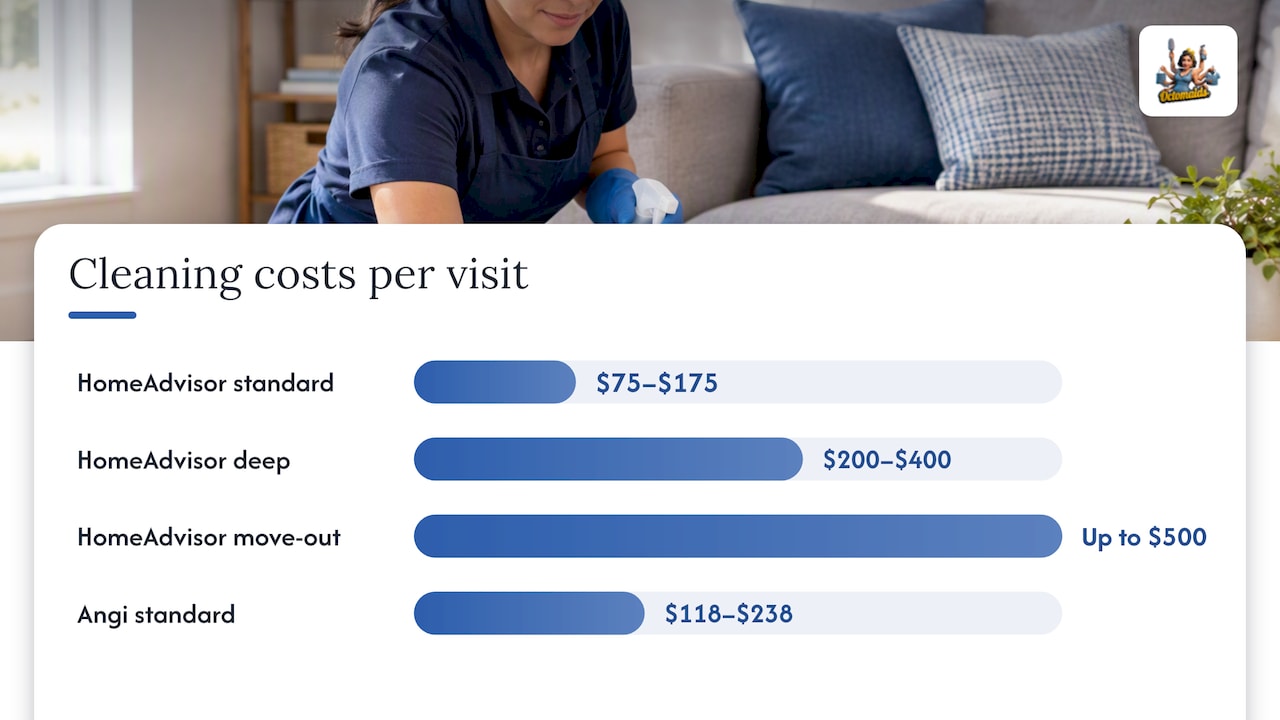
Recurring bookings often cost less per visit than one-time deep cleans, since routine maintenance is more efficient than restoring a neglected home, which is why many companies discount weekly or biweekly plans compared with single visits.
A few factors push price up or down regardless of which service you book:
- Home size and bathroom or bedroom count are the biggest drivers of time, and therefore cost.
- Frequency matters: weekly and biweekly plans typically cost less per visit than monthly or one-time service.
- Add-ons like inside-oven cleaning, interior windows, or carpet shampooing are usually quoted on top of the base price.
- Company versus independent cleaner changes the price and what’s included; companies often charge more but provide insurance and backup staffing.
Always ask exactly what’s included in the quoted price before you book, since “standard cleaning” means different things to different providers.
4. A simple checklist for picking the right hire
Once you know the cost ranges and task breakdowns, the decision usually comes down to a handful of practical questions. Work through this list before you call anyone:
- How often do you need help? Daily or multi-day needs point to a housekeeper; weekly, biweekly, or one-time needs point to a house cleaner.
- What tasks matter most? Laundry and dishes favor a housekeeper; bathroom and kitchen deep cleaning favor a house cleaner.
- What’s your budget per visit? Recurring plans generally cost less per visit than one-time deep cleans or move-out jobs.
- Do you need background checks and insurance? A vetted company typically offers both; an independent hire may not.
- Do you want to supply your own products, or have the provider bring them? Confirm this upfront to avoid a surprise on day one.
A few scenarios make the match obvious. A busy working parent juggling school runs and laundry piles usually benefits most from a recurring housekeeper. A landlord preparing a unit between tenants needs a house cleaner for a one-time move-out job. A short-term rental host needs a cleaner on a turnover schedule tied to bookings, not a daily housekeeper. A senior living alone may want a light housekeeper a few days a week for companionship-adjacent help plus periodic deep cleaning from a separate visit.
Pro Tip: Pair a recurring light-cleaning service for daily upkeep with an occasional deep clean every few months. You get consistent maintenance without paying deep-clean rates every week.
5. IRS rules, worker status, and safety basics you shouldn’t skip
Hiring directly, rather than through a company, can trigger tax and legal obligations many homeowners don’t expect. Under IRS Publication 926, if you pay a household employee cash wages of $3,000 or more during the year, you generally must withhold 7.65% for Social Security and Medicare taxes and pay a matching employer share. The deciding factor isn’t the job title, it’s control: a worker is your household employee if you direct what tasks get done and how they’re performed, regardless of whether the work is part-time or full-time.
That control test also determines whether you file Schedule H at tax time or treat the worker as an independent contractor who handles their own taxes. Hiring through a cleaning company sidesteps this question entirely, since the company is the employer of record.
Safety matters too. OSHA guidance on cleaning chemicals warns that mixing products like bleach and ammonia creates hazardous fumes, and recommends proper training, dilution practices, and personal protective equipment for anyone doing this work regularly.
- $3,000 is the 2026 cash-wage threshold that triggers Social Security and Medicare withholding for a household employee.
- Control over tasks and methods, not job title, determines employee versus contractor status.
- Chemical safety training and PPE reduce risk for anyone handling cleaning products regularly.
6. Questions to ask before you book anyone
A short round of questions upfront saves you from vague scope, surprise fees, or an uninsured worker in your home. Before confirming any booking, ask:
- What exactly is included in a standard visit, and what counts as an add-on?
- Will the same person or team come every time, or does staffing rotate?
- Who provides supplies, and are they safe for your surfaces and pets?
- Are workers insured and background-checked, and can you see proof?
- What’s the cancellation policy, and how is the final price confirmed?
A vague answer to any of these is worth noticing. Providers who dodge questions about insurance, won’t name a fixed scope, or can’t offer a reference are worth skipping in favor of one who answers clearly the first time.
7. Why consistency matters more than the title on the invoice
In my experience talking with homeowners about this decision, the title matters less than whether the same trustworthy person shows up on schedule. Many people land on a vetted local company for recurring service specifically because it removes the guesswork: one insured team, a consistent face, and a scheduling system that doesn’t fall apart when someone gets sick. Background checks and team continuity aren’t just nice extras, they’re what turns a stranger in your home into a routine you don’t think twice about. Match whichever option you choose to the checklist above, and the title on the invoice stops mattering.
— Steven
8. How Octomaids covers both housekeeping and deep cleaning needs
We built our business around the gap this article describes: some homes need steady upkeep, others need a scheduled deep clean, and plenty need both at different times. Serving Vancouver, WA and the Portland, OR metro area, we send the same dedicated, background-checked team to your home every visit instead of rotating unfamiliar staff through your door.
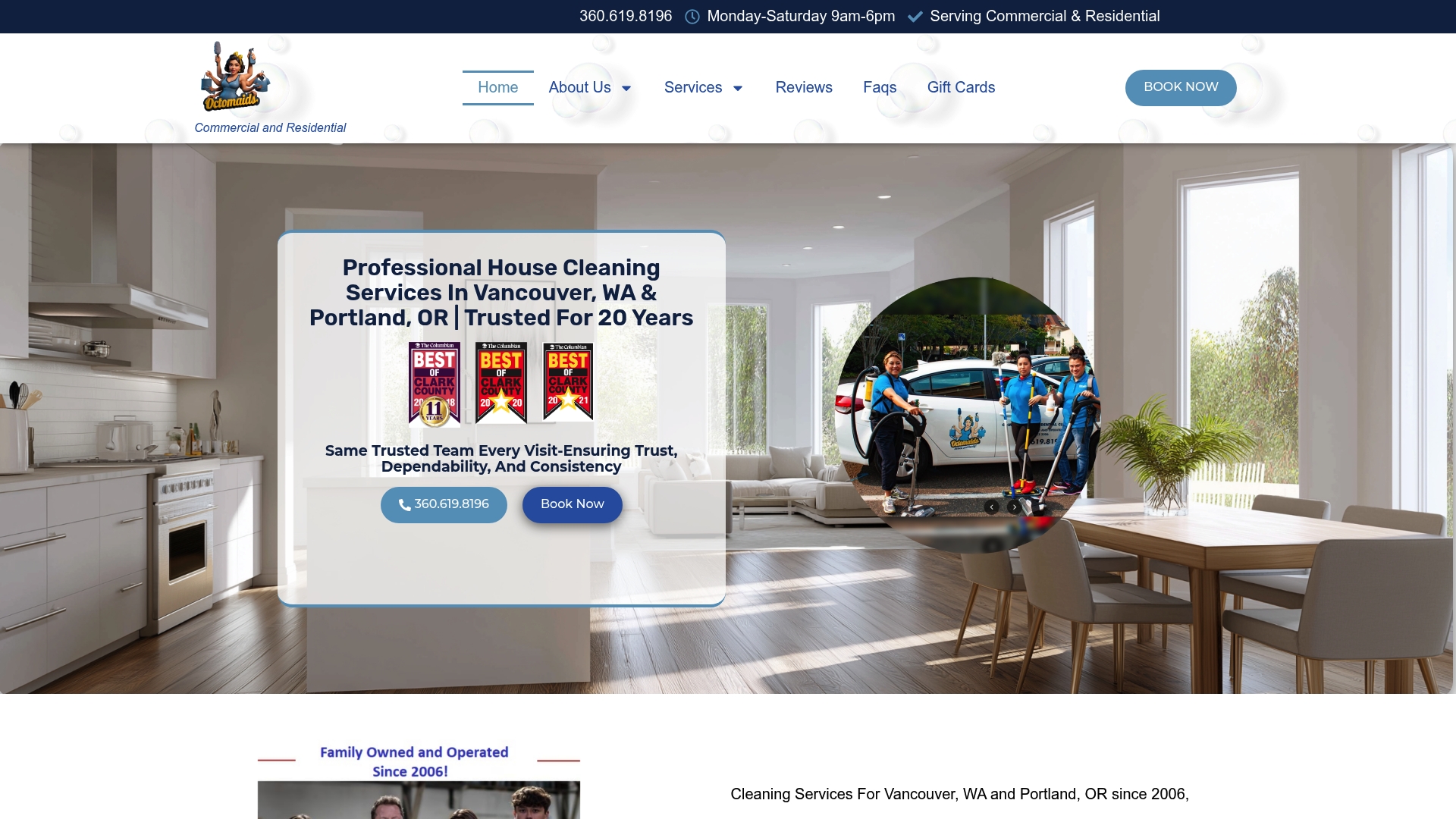
Whether you’re after recurring home cleaning for daily-life maintenance, a one-time deep clean to reset a neglected space, or move-in/move-out cleaning for a transition, we back every visit with a satisfaction guarantee. Reach out through our service pages to get a quote and lock in a schedule that fits your household.
FAQ
Is a housekeeper the same as a house cleaner?
No. A housekeeper handles ongoing daily or multi-day chores like laundry, dishes, and tidying, while a house cleaner performs scheduled, task-focused deep cleaning such as scrubbing bathrooms and floors. The right choice depends on how often you need help and which tasks matter most to you.
Is $50 an hour good for house cleaning?
Yes, $50 an hour falls within the typical range, since hourly rates commonly run between $25 and $90 depending on experience and whether you’re hiring a company or an individual. A rate at the higher end often reflects insurance, background checks, or a company’s structured team.
What is the difference between a cleaner and a housekeeper?
A cleaner typically works on a scheduled basis, weekly, biweekly, or monthly, focusing on deep tasks like scrubbing kitchens and bathrooms, per Angi’s comparison of the two roles. A housekeeper works more frequently, often daily, handling ongoing chores like laundry and dishwashing rather than periodic deep cleaning.
What should a housekeeper not do?
Housekeepers generally aren’t expected to handle heavy, infrequent deep-cleaning tasks like scrubbing grout, cleaning inside ovens, or shampooing carpets, since those typically fall under a house cleaner’s scope. If you need both daily upkeep and occasional deep cleaning, it’s worth confirming which tasks each provider actually covers before you book.
Sources
- Publication 926 (2026), Household Employer’s Tax Guide | Internal Revenue Service
- How Much Does It Cost to Hire a Housekeeper? 2025 Data
- Care
- Protecting Workers Who Use Cleaning Chemicals
Recommended
- Domestic Help: A Hiring Guide for U.S. Families
- How to Hire a House Cleaner for the First Time
- 9 Jobs House Cleaners Refuse, Who to Call and How to Prepare
- Maids for Hire: How to Find and Book the Right Help
About Octomaids
Octomaids is a locally operated professional cleaning company serving Vancouver, Clark County, and the surrounding Portland metro area. Since 2006, our cleaning teams have helped homeowners, renters, property managers, and businesses with recurring cleaning, deep cleaning, move-in/move-out cleaning, and commercial cleaning.
Our cleaning articles are reviewed to ensure the information reflects our real-world experience and professional cleaning practices.