


You can hire a professional cleaning company to service your home or office without leaving behind synthetic fragrance, and Octomaids offers this as a documented accommodation, not a special favor. Fragrance-free professional cleaning means substituting unscented products, using HEPA-filtered equipment, and following protocols that skip air fresheners and masking agents entirely. The next step is simple: ask any provider for their ingredient exclusion list and request an intake walkthrough before your first appointment.
TL;DR:
- Fragrance-free cleaning involves using unscented products, HEPA-filtered equipment, and protocols that exclude air fresheners and masking agents, confirmed by written ingredient lists.
- About 12.8% of Americans report some chemical sensitivity, making it likely that most cleaning providers serve clients with fragrance reactions, especially in shared spaces or rental units.
- Recurring services with allergen-control protocols typically cost 20 to 30% more, but they offer better long-term management of sensitivities through consistent low-residue cleaning.
- Verifying a provider’s claim requires inquiring about specific product lists, HEPA equipment details, and their process for handling accidental product use, with responses documented in writing.
- For sensitive households, providers like Octomaids build documented, enforceable protocols that begin with a detailed intake and allow for client-supplied products, but complex issues like mold or duct contamination require specialized remediation.
Table of Contents
- Who Needs Fragrance-Free Cleaning and Why It Matters
- What a Fragrance-Free Cleaning Service Actually Includes
- How to Verify a Provider’s Fragrance-Free Claims Before You Book
- What Fragrance-Free Cleaning Costs and Where It Has Limits
- Why We Treat Fragrance-Free Requests as Standard, Not Special
- Book Fragrance-Free Cleaning With Octomaids
- Sources
- FAQ
Who Needs Fragrance-Free Cleaning and Why It Matters
Roughly 12.8% of Americans report some level of chemical sensitivity, according to a 2018 study on multiple chemical sensitivity. That is not a fringe number. It means a cleaning company serving any reasonably sized neighborhood, apartment complex, or office building is statistically certain to have clients who react to synthetic fragrance, whether they mention it or not.
The demand shows up in a few recurring situations:
- Households managing asthma, migraines, or diagnosed multiple chemical sensitivity
- Landlords turning over rental units for incoming tenants with documented allergies
- Office managers accommodating employees under workplace fragrance policies
- Short-term rental hosts trying to avoid guest complaints about lingering chemical smells
For landlords and office managers, there is also a practical accommodation angle. Fragrance-free policies increasingly get framed as reasonable accommodations in shared workspaces, similar to how you’d handle a mobility or dietary request. Providers who build this into their standard offering tend to retain clients longer, simply because switching cleaning companies mid-lease or mid-contract is a hassle nobody wants. If you manage property or staff, getting ahead of the request costs you nothing and saves you a scramble later.
What a Fragrance-Free Cleaning Service Actually Includes
A real fragrance-free engagement starts before anyone touches a mop. It runs through intake, product selection, equipment specs, and technique, and skipping any one of those steps quietly breaks the promise.
- Intake and home profile. A documented walkthrough where the provider notes specific sensitivities (fragrance, dye, certain chemical classes) and builds a client profile the cleaning team references every visit, not just the first one.
- Ingredient exclusion list. Because “fragrance-free” and “hypoallergenic” aren’t federally regulated terms, you need a written list of excluded ingredients, not a verbal assurance. Some clients with severe sensitivities arrange to supply their own approved products, and a provider willing to accommodate that is showing you they take the request seriously.
- HEPA-rated vacuuming across soft surfaces. True HEPA, per DOE and EPA standards, captures 99.97% of particles at 0.3 microns. That standard has to apply to floors, upholstery, mattresses, and drapes, not just the areas people notice first. Dust mite allergen collects heavily in upholstery and mattresses, so skipping those surfaces defeats the point.
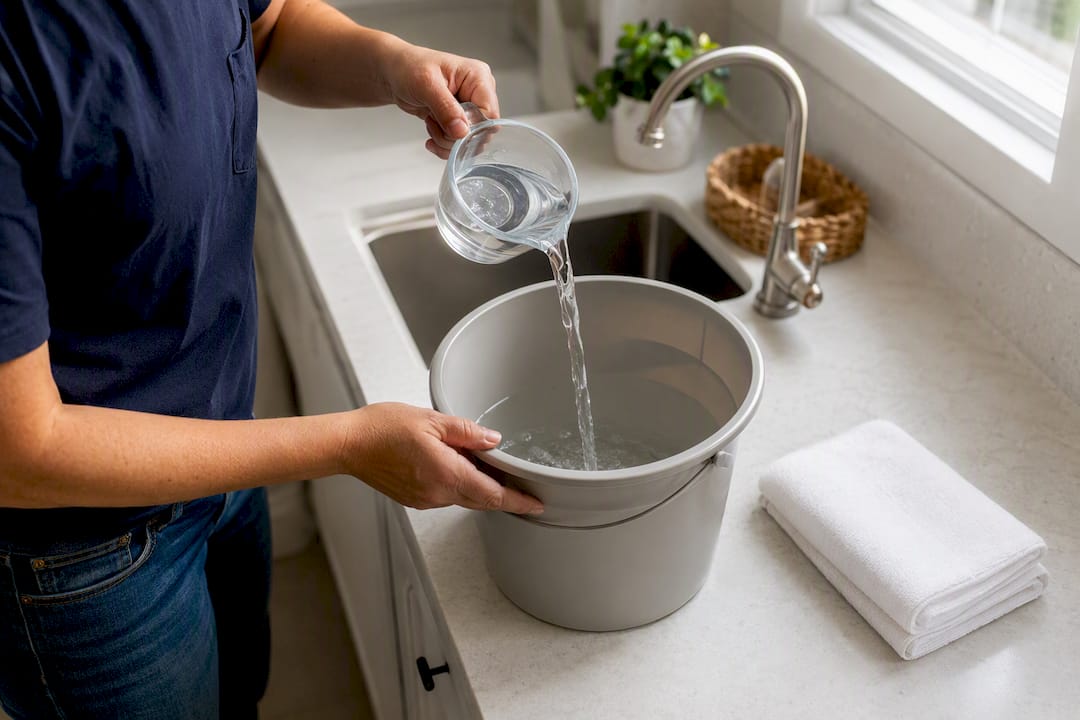
- Process changes that go beyond swapping bottles. No aerosols, no plug-in air fresheners, careful dilution ratios, and rinsing high-contact surfaces after cleaning rather than leaving residue to evaporate on its own.
Microfiber handling matters more than most clients realize. Cloths used in a fragrance-heavy area of a shared building can carry trace residue into a fragrance-free unit next door. Serious providers launder microfiber by zone or use single-use cloths for sensitive accounts, a detail industry guidance on fragrance-free protocols flags as one of the most common points of failure.
Pro Tip: Ask specifically whether your provider uses hot water and precise dilution rather than heavier product volume, following waterless interior cleaning steps for your home garage techniques. Cleaner rinse cycles cut down on the residue that triggers reactions long after the visit ends.*
How to Verify a Provider’s Fragrance-Free Claims Before You Book
Anyone can put “unscented options available” on a website. Verifying it takes a short conversation and a few specific questions before you sign anything.
Ask the provider directly:
- Can you send a written product list and ingredient exclusion list before the first visit?
- What HEPA vacuum model do you use, and is it HEPA-rated or “HEPA-style”?
- Do you use stronger, fragranced products in kitchens or bathrooms, and can that be adjusted?
- What’s your process if a team member accidentally uses the wrong product?
Get the answers in writing where you can. A work order or service agreement should state “no air fresheners or aerosol products” explicitly, note any areas where stronger disinfectants are still required (some health codes mandate specific sanitizers in food-prep areas), and confirm whether you’re allowed to supply your own products for sensitive rooms.
Give the provider at least 48 hours’ lead time before a first visit if you’re requesting a full protocol switch. That’s enough time for a walkthrough, a review of your home profile, and confirmation that the assigned team has the right supplies loaded. Photo documentation of the products brought on-site, paired with a quick follow-up call after the visit, closes the loop and gives you a record if anything needs adjusting.
For details on how providers typically structure these conversations, see how cleaning services handle special requests during booking.
What Fragrance-Free Cleaning Costs and Where It Has Limits
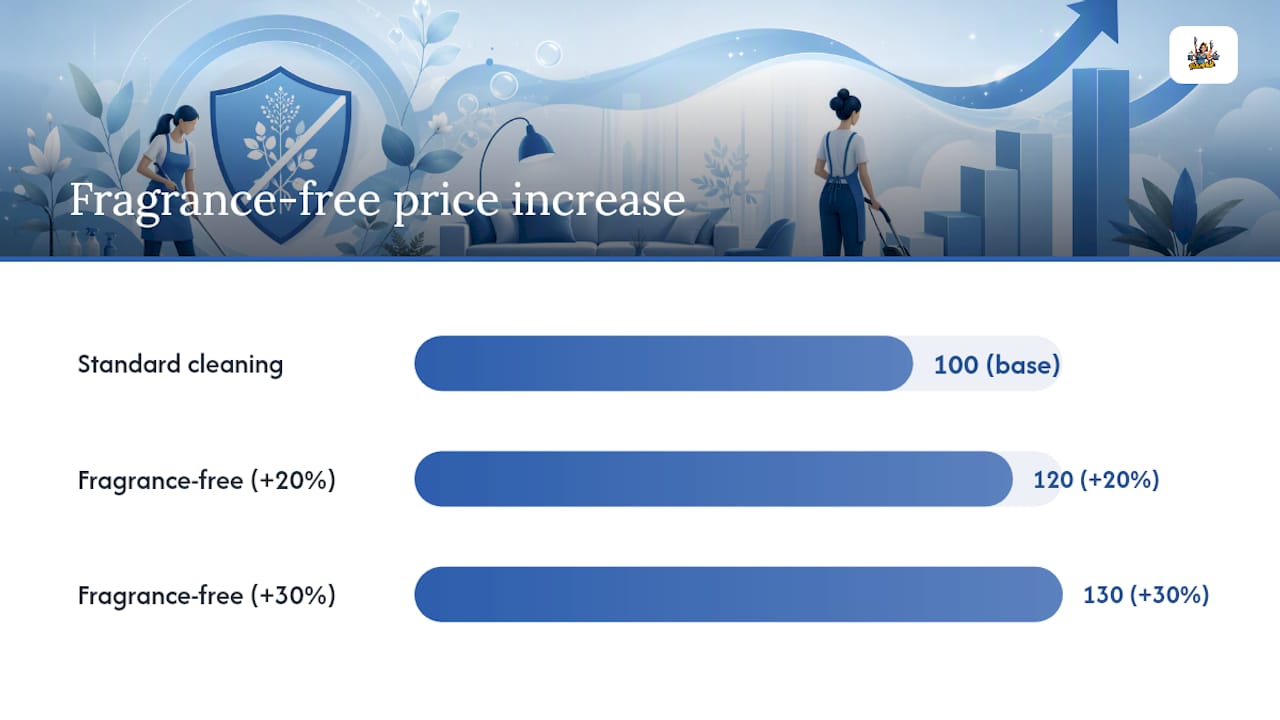
Expect to pay somewhat more than standard cleaning. Fragrance-free and allergen-focused product lines often run 20 to 30% higher in cost than standard fragranced equivalents, and that premium usually gets reflected in the service price. The added cost covers specialized products, staff training on modified protocols, and slower, more careful technique, not padding.
A few logistics worth planning around:
- Recurring service reduces allergen buildup faster than one-time visits. Weekly or biweekly plans keep dust mite and residue levels consistently low, which matters more for sensitivity management than an occasional deep clean.
- Move-out and deep cleans cover more ground per visit, which usually means a longer appointment and a higher one-time cost compared to routine maintenance.
- Some problems are outside a cleaning company’s scope entirely. Mold remediation, HVAC duct cleaning, and deep carpet extraction for years of accumulated allergen often require a licensed specialist, and a provider recommending you bring one in is being honest with you, not passing off a job it wants to avoid.
If you’re weighing which service tier fits your situation, a recurring cleaning plan generally offers better allergen control per dollar than sporadic one-time bookings.
Why We Treat Fragrance-Free Requests as Standard, Not Special
Most cleaning companies treat “unscented” as an upsell or an inconvenience. That’s backwards. Fragrance sensitivity is common enough, at nearly 1 in 8 adults by some estimates, that a company without a real fragrance-free protocol is simply unprepared for a large share of the market it claims to serve.
Octomaids has served Vancouver, WA, and Portland, OR, since 2006, across recurring house cleaning, deep cleans, move-in and move-out service, office cleaning, and short-term rental turnovers. Every fragrance-free request starts the same way: a documented intake that records specific triggers, and a willingness to work with client-supplied products when a household’s sensitivity calls for it. That documentation is what makes the promise enforceable visit after visit, not just on the first walkthrough.
We’re also direct about limits. If a client is dealing with mold, water damage, or years of embedded allergen in ductwork, that’s a remediation specialist’s job, not a cleaning appointment. Being honest about that boundary is part of doing this work responsibly.
— Steven
Book Fragrance-Free Cleaning With Octomaids
Octomaids gives you a documented, enforceable fragrance-free protocol, not just a checkbox on a booking form. Whether you need recurring maintenance, a one-time deep clean, a move-in or move-out turnover, office janitorial service, or short-term rental cleaning between guests, you can request unscented products and modified protocols for any of them.
Here’s how it works: when you book through our services page, add a note specifying your fragrance sensitivity, any products you’d like excluded, or products you’d prefer to supply yourself. Our team will confirm your home profile during the walkthrough and document it so every future visit follows the same protocol, not just the first one. If you’re setting up an ongoing plan, our recurring cleaning services option keeps allergen levels consistently low instead of spiking between occasional visits. Reach out today and tell us what you need excluded. We’ll build the plan around it.
Sources
- Multiple Chemical Sensitivity and Physiologic Reactivity to Chemical Exposures
- HEPA vacuum guidance (EPA)
FAQ
What does “fragrance-free cleaning” actually mean?
It means a cleaning provider uses unscented products, skips aerosols and air fresheners, and follows a documented protocol built around your specific sensitivities, rather than simply avoiding one obviously scented spray.
Is “fragrance-free” on a product label a reliable guarantee?
No. These terms aren’t federally regulated, so ask your provider for a written ingredient exclusion list instead of relying on packaging claims alone.
Does fragrance-free cleaning cost more?
Yes, typically 20 to 30% more due to specialized product costs and additional staff training, though recurring plans often offset the premium over time.
Can I supply my own cleaning products for a sensitive household?
Many providers, including Octomaids, will accommodate client-supplied products for severe sensitivities when it’s documented during intake and confirmed in the work order.
What should I ask before booking a fragrance-free cleaning service?
Request a written product list, confirm the vacuum is genuinely HEPA-rated rather than “HEPA-style,” and ask whether stronger products are still used in kitchens or bathrooms.
Recommended
- Cleaning Services Near Me | Residential & Commercial
- Pet-Friendly House Cleaning: The Safe, Non-Toxic Approach
- How to Maintain a Clean Home Between Visits
- Hire an Eco-Friendly Cleaning Service That Verifies Its Claims
About Octomaids
Octomaids is a locally operated professional cleaning company serving Vancouver, Clark County, and the surrounding Portland metro area. Since 2006, our cleaning teams have helped homeowners, renters, property managers, and businesses with recurring cleaning, deep cleaning, move-in/move-out cleaning, and commercial cleaning.
Our cleaning articles are reviewed to ensure the information reflects our real-world experience and professional cleaning practices.