



Most professional house cleaning services do not include full clothing laundry as a standard task. Many will handle linens, towels, and even start or transfer a load for you, but sorting, folding, and putting away someone’s personal wardrobe usually falls outside a typical cleaning visit. The reasons come down to time, liability, and the judgment calls involved in handling fabrics that aren’t the cleaner’s own. The rest of this guide breaks down exactly which laundry tasks are common, which cost extra, and how to ask for what you need.
TL;DR:
- Most cleaning services include washing linens and towels, but full clothing laundry usually requires an explicit extra service and costs between $176 and $261 nationally.
- Housekeepers tend to handle laundry regularly during frequent visits, whereas house cleaners generally do not include laundry unless specifically requested and paid for as an add-on.
- Providers often price laundry as a flat fee, per load, or hourly, so asking for a detailed quote and clarifying the scope beforehand prevents unexpected charges.
- Handling delicate fabrics or stain treatment is limited by liability and complexity, with most companies avoiding personal clothing or high-risk items.
- Explicitly specify which laundry tasks you want, including detergent preferences and folding or put-away expectations, to ensure accurate service and pricing.
Table of Contents
- Do Cleaners Do Laundry? What “Laundry” Actually Covers
- Housekeeper vs. House Cleaner: Who Actually Handles Laundry?
- How Cleaning Companies Structure Laundry as a Service
- What Does Laundry Cost When You Add It to a Cleaning Visit?
- How to Ask Your Cleaner for Laundry Help (And What to Watch For)
- How Octomaids Scopes Laundry Requests in Real Bookings
- Book a Cleaning That Fits Your Actual Laundry Needs
- Sources
- FAQ
Do Cleaners Do Laundry? What “Laundry” Actually Covers
The word “laundry” hides a surprising amount of variation, and that’s exactly why so many homeowners get mismatched expectations on cleaning day. A cleaner who says “yes, we do laundry” might mean they’ll toss your towels in the wash. Another might mean full wash, dry, fold, and put-away for every family member’s closet. Those are two entirely different jobs.
Breaking laundry into its component tasks makes it much easier to request precisely what you want:
- Linens and towels: Stripping beds, gathering bath towels, and washing them is the most commonly accepted laundry task in a standard cleaning visit.
- Starting or transferring a load: Some cleaners will start a wash cycle or move a load from washer to dryer while they clean other rooms, treating it as a background task rather than a dedicated service.
- Full wash, dry, and fold: Washing an entire household’s clothing from hamper to folded stack is far less common and typically requires an explicit add-on.
- Folding only: A cleaner might fold laundry that’s already washed and sitting in the dryer, especially if it doesn’t require sorting delicate items.
- Putting laundry away: Returning folded clothes to drawers and closets crosses into personal organization territory that many cleaners decline, partly because it means handling someone else’s belongings in private spaces.
- Ironing: Rarely included by default; usually priced as a separate specialty service if offered at all.
- Stain treatment: Judgment calls on fabric type, stain age, and washing method carry enough risk that many companies exclude this entirely.
Cleaning companies commonly draw the line at linens and towels because those items are low-risk, machine-washable, and rarely require the kind of judgment call that a silk blouse or a wool sweater demands. One cleaning service blog that breaks down these boundaries notes that full wardrobe sorting and stain judgment frequently get treated as separate household-help work rather than folded into a standard cleaning visit. The distinction isn’t arbitrary. A cleaner who ruins a $20 bath towel is a minor issue. A cleaner who shrinks a $200 cashmere sweater is a liability conversation nobody wants to have.
Housekeeper vs. House Cleaner: Who Actually Handles Laundry?
If laundry matters to you, the service model you hire matters more than the specific company. Housekeepers and house cleaners get used interchangeably in casual conversation, but the industry draws a real distinction between them, and it directly affects whether laundry shows up in your service.
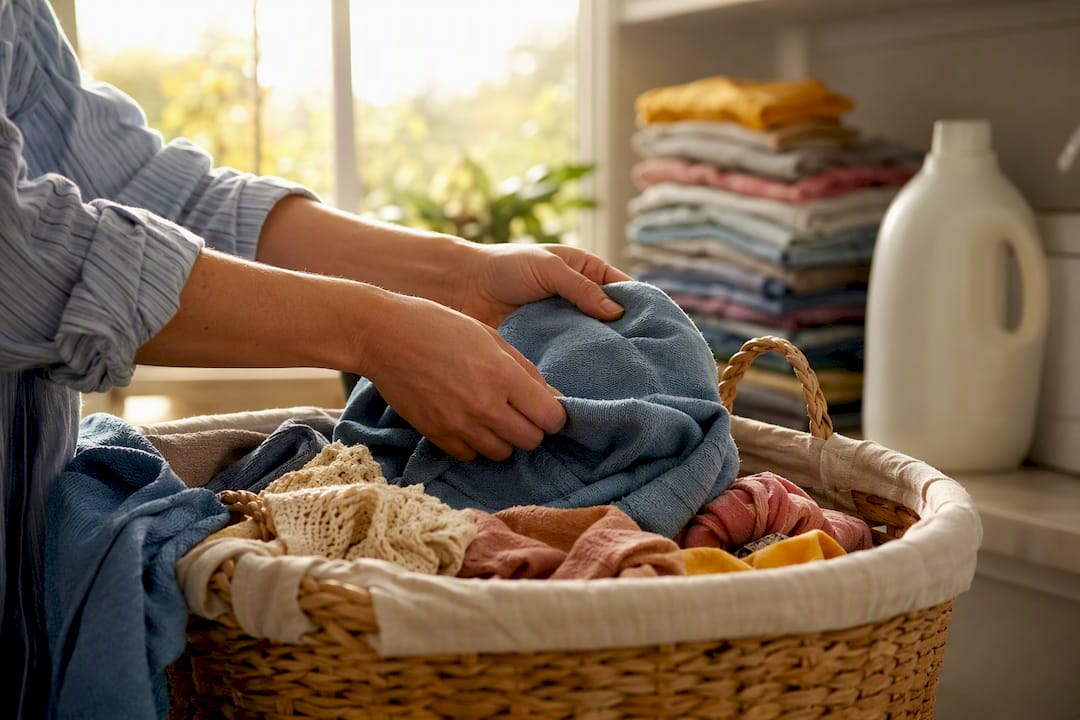
Housekeepers typically handle the ongoing rhythm of household management, and that often includes laundry and dishes as part of the regular routine. House cleaners, by contrast, are usually hired less frequently for deeper cleaning tasks, and laundry doesn’t usually come standard, according to Angi’s comparison of the two roles. The frequency difference tells the story: housekeepers often visit daily or several times a week, while house cleaners show up every two weeks to once a month.
That schedule gap explains a lot about what each role is built for:
- A housekeeper fits households that want ongoing help with meals, laundry, tidying, and errands woven into daily life, similar to hiring a part-time household manager.
- A house cleaner fits households that want a periodic deep reset, focused on surfaces, floors, bathrooms, and kitchens rather than the day-to-day laundry cycle.
- A family with young kids and constant laundry volume usually gets more value from a housekeeper’s regular presence than from a biweekly cleaner trying to squeeze in three loads.
- A single professional or couple with a lighter laundry load might find that a house cleaner who occasionally adds linens is plenty.
If laundry is a dealbreaker for you, say so before you book, and consider whether your actual need is a housekeeper’s ongoing support rather than a house cleaner’s periodic deep clean. The two roles solve different problems, even when the job listings use the words interchangeably.
How Cleaning Companies Structure Laundry as a Service
Professional cleaning companies didn’t stumble into their laundry policies by accident. Most built them around two practical realities: time budgets and liability exposure. Understanding both helps explain why the same company might wash your towels without blinking but decline to touch your dry-clean-only jacket.
Companies typically structure laundry using one of a few models:
- Linen-only inclusion: Bed linens and bath towels are washed as part of a standard or deep clean, often with no separate charge, because the task is low-risk and pairs naturally with bed-making and bathroom cleaning.
- Flat add-on fee: A set price gets added to the visit for handling one or two loads of laundry, regardless of load size.
- Per-load pricing: Some companies charge by the load rather than a flat fee, which scales more fairly for larger households.
- Full exclusion: Some cleaning companies decline clothing laundry altogether and stick strictly to surface cleaning.
Liability sits at the center of these decisions. According to Care, many professional cleaners will add laundry for an extra fee, but some decline outright because of insurance and liability limits tied to personal clothing and fabric care. If a cleaner shrinks a customer’s wool coat or runs a color that bleeds onto other garments, the company absorbs that cost or fields a dispute, and many insurance policies simply don’t extend coverage to that kind of damage on personal items.
Laundry also eats into the clock. A standard two-hour cleaning visit budgeted for surface work doesn’t have slack built in for sorting hampers, running multiple wash cycles, and folding. When laundry gets added, either the visit runs longer or something else gets cut, which is why companies that do offer it usually price it as separate time rather than squeezing it into the existing window.
Pro Tip: If you want laundry done well, don’t just ask “can you do laundry?” Ask how much extra time they’ll block out for it. A cleaner who says yes without adjusting the schedule is probably planning to rush your bathrooms instead.
What Does Laundry Cost When You Add It to a Cleaning Visit?
Adding laundry to a cleaning visit isn’t free, and the pricing structure varies more than most homeowners expect. Getting a clear number upfront saves you from an awkward invoice surprise later.
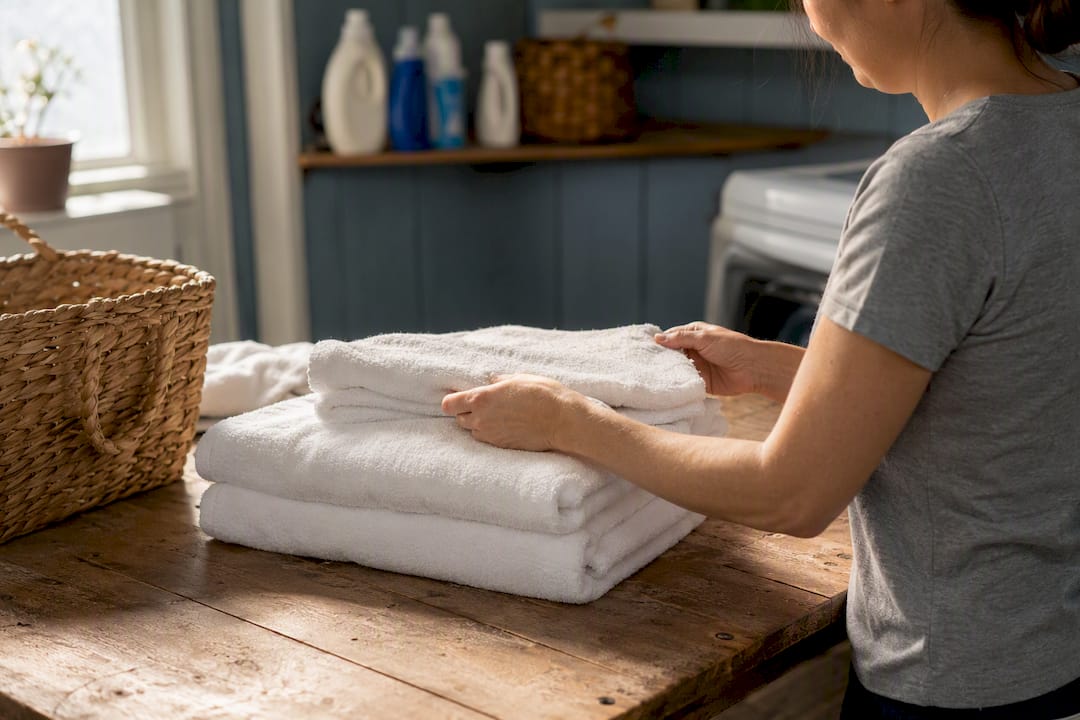
National add-on data: Thumbtack lists laundry as a separate additional service in its national house cleaning pricing data, with sample ranges running roughly $176 to $261 for the add-on. That range reflects national averages and shifts based on your region, the size of your household, and how many loads you’re asking for.
A few pricing patterns show up consistently across the industry:
- Flat add-on fee: A fixed amount tacked onto your regular cleaning invoice, common when the laundry request is limited to linens and towels.
- Per-load charges: More common when full clothing laundry is requested, since load count varies wildly between a one-person apartment and a family of five.
- Hourly billing: Some cleaners fold laundry time into their hourly rate rather than pricing it separately, which works fine as long as you know roughly how long it’ll take.
The best way to avoid an inflated bill is to ask for an itemized quote before the visit rather than after. Ask specifically whether the laundry charge is flat, per load, or hourly, and get a ballpark on how many loads your household typically generates. A quote that just says “laundry: extra” without a number attached is worth pushing back on. Regional cost of living also plays a role. A laundry add-on in a major metro area often runs higher than the same service in a smaller market, so treat the Thumbtack range as a starting point rather than a guarantee.
How to Ask Your Cleaner for Laundry Help (And What to Watch For)
Getting laundry included smoothly comes down to asking the right questions before the appointment, not negotiating mid-visit while your cleaner is standing there with a hamper. A little upfront clarity prevents almost every laundry-related disappointment homeowners run into.
Here’s a practical sequence for scoping the request:
- Ask what’s included by default. Some companies already fold linens and towels into a standard visit; find out before assuming you need to pay extra.
- Specify exactly which tasks you want. Say “wash and dry two loads of towels” rather than “do laundry,” since vague requests lead to vague results.
- Ask about detergent and fabric preferences. If you have allergies or specific products you want used, say so upfront rather than discovering the wrong detergent after the fact.
- Ask about their stain-handling policy. Some cleaners will treat visible stains as part of the wash; others will skip anything that looks complicated to avoid liability.
- Clarify folding and put-away expectations. Folding is more commonly included than put-away, so confirm which one you’re actually getting.
- Ask how much extra time and cost this adds. Get a specific number, not a vague “a little more.”
Operations managers who work with home cleaning clients regularly recommend asking cleaners directly whether they handle laundry, since many providers offer it as an add-on rather than volunteering it upfront, according to Care.com’s guide for hiring house cleaners. Threads on forums like r/housekeeping echo the same advice from the other side of the industry: cleaners themselves say the phrasing of the request matters, and specifying linens versus clothing changes what they’re willing to take on.
Watch for a few red flags: a cleaner who agrees to “do laundry” without asking any clarifying questions, a quote with no separate line item for the added task, or a policy that changes verbally between the phone call and the actual visit. Pro Tip: Get the laundry scope in writing, even if it’s just a text message confirming “two loads of towels, folded, no put-away, $25 flat.” A paper trail prevents the most common laundry disputes before they start.
How Octomaids Scopes Laundry Requests in Real Bookings
Octomaids treats laundry the way most established cleaning companies do: as a task that depends heavily on which service you’re booking. In a recurring house cleaning visit, linens and towels are the most common laundry-adjacent task, often paired with bed-making and bathroom resets. In move-in and move-out cleanings, bedding changes and towel handling show up more routinely, since those jobs already involve resetting an entire living space for a new occupant. Short-term rental turnovers follow a similar pattern, where fresh linens between guests are part of the expected workflow rather than a special request.
Full clothing laundry sits outside Octomaids’ standard scope, consistent with how the broader industry treats liability around personal fabric care. Homeowners who want extra time budgeted for towels or bedding changes get the best results by mentioning it when booking rather than asking mid-visit, since the team schedules cleaning time based on the tasks confirmed in advance. Octomaids also publishes guidance on which cleaning tasks are worth hiring out for homeowners trying to decide where a cleaning team’s time is best spent.
— Steven
Book a Cleaning That Fits Your Actual Laundry Needs
Skip the guesswork of calling around to ask five different companies whether they’ll touch your towels. Octomaids serves homeowners and renters across Vancouver, WA and the Portland, OR metro area, and every booking starts with a conversation about exactly what you need, including linens, bedding changes, and where laundry fits into your visit.
Whether you’re setting up a recurring cleaning schedule, prepping a property for move-in or move-out, or turning around a short-term rental between guests, mention your linen and towel needs when you request a quote so the team can budget the right amount of time. A quick note in your booking request, something as simple as “please include a towel wash,” gets the scope confirmed before anyone shows up at your door. Request a quote today and get a clear answer on what’s included before your first visit.
Sources
FAQ
Do cleaners usually do laundry?
Most house cleaners don’t include full clothing laundry by default, though many will wash linens and towels or offer laundry as a paid add-on. Housekeepers, who visit more frequently, are more likely to include laundry as part of their regular routine.
How much do cleaners charge for laundry?
National data from Thumbtack shows laundry priced as an additional service ranging roughly from $176 to $261, though your actual cost depends on region, load count, and whether the company charges flat, per load, or hourly.
How much does it cost to pay someone to do a load of laundry?
Pricing varies by provider and location, but cleaning companies that offer laundry as an add-on typically charge either a flat fee per visit or a per-load rate rather than pricing a single load in isolation.
How much do dry cleaners charge for laundry?
Dry cleaners operate under a different pricing model entirely, charging per garment based on fabric type and service, which is separate from the wash-and-fold or linen services offered by residential cleaning companies.
Are laundry services included with Octomaids cleanings?
Octomaids commonly includes linens and towels as part of recurring cleanings, move-in/move-out services, and short-term rental turnovers, while full clothing laundry can be discussed and scoped when you request a quote.
Recommended
- How to Prepare Your Home for a Cleaning Service
- Vetting Trustworthy Home Cleaners: Your 2026 Guide
- How to Hire a House Cleaner for the First Time
- What Professional Cleaners Do Differently in Your Home
About Octomaids
Octomaids is a locally operated professional cleaning company serving Vancouver, Clark County, and the surrounding Portland metro area. Since 2006, our cleaning teams have helped homeowners, renters, property managers, and businesses with recurring cleaning, deep cleaning, move-in/move-out cleaning, and commercial cleaning.
Our cleaning articles are reviewed to ensure the information reflects our real-world experience and professional cleaning practices.