



The most effective cleaning priorities for small urban homes follow this order: declutter first, then kitchen, bathroom, high-touch surfaces, floors, and entry reset. Steven, lead cleaning expert at Octomaids, recommends building your routine around these five micro-tasks, each capped at 5–15 minutes:
- Declutter surfaces (5 min) — you can’t clean what you can’t see
- Kitchen wipe-down and dishes (10 min) — the highest-traffic zone in any small home
- Bathroom with dwell time (10 min) — spray first, scrub after a 10-minute wait so the product does the work
- High-touch surfaces (5 min) — counters, remotes, light switches
- Quick floor pass (5 min) — sweep or vacuum the main path
- Entry reset (2 min) — shoes, keys, and mail in their designated spots
A daily reset runs about 15 minutes. A thorough weekly clean takes 60–90 minutes when you work by zone, starting farthest from the door and moving toward the exit.
Table of Contents
- Why you can’t skip decluttering before you clean
- High-impact areas to clean first in a small home
- What does a realistic cleaning schedule look like for a small home?
- Storage systems that actually reduce your cleaning steps
- Which cleaning tasks are worth hiring a professional for?
- Your printable cleaning checklist for daily, weekly, and monthly tasks
- Key Takeaways
- The part most cleaning guides get wrong
- Octomaids handles the cleaning you don’t want to do
- Useful sources
- FAQ
Why you can’t skip decluttering before you clean
Decluttering before cleaning is the essential first step because you cannot clean a surface you cannot see. Wiping down kitchen counters is nearly impossible when they’re covered with unopened mail or random items. Professional cleaners treat decluttering as a blank-slate ritual, not an optional warm-up.
Two methods make it fast and repeatable:
- Three-bag method — use separate bags for trash, recycling, and donations. Work one zone at a time. Anything that belongs in another room goes into a separate container.
- Laundry Basket Method — keep a basket with you as you clean and drop misplaced items into it. Redistribute everything at the end. This stops you from rabbit-holing into a different room mid-clean.
Timebox it: a 5-minute arrival reset when you get home, a 15-minute evening reset before bed, and a 30–45 minute zone declutter once a week. The key is consistency, not perfection.
Pro Tip: Keep a permanent donation bag in your closet. When something no longer earns its space, it goes in immediately — no second-guessing later.
High-impact areas to clean first in a small home
Prioritize kitchen, bathroom, and entry. Then move to multi-use surfaces: tabletops, counters, and remote controls. These four zones account for the majority of visible grime and odor in a small urban home.
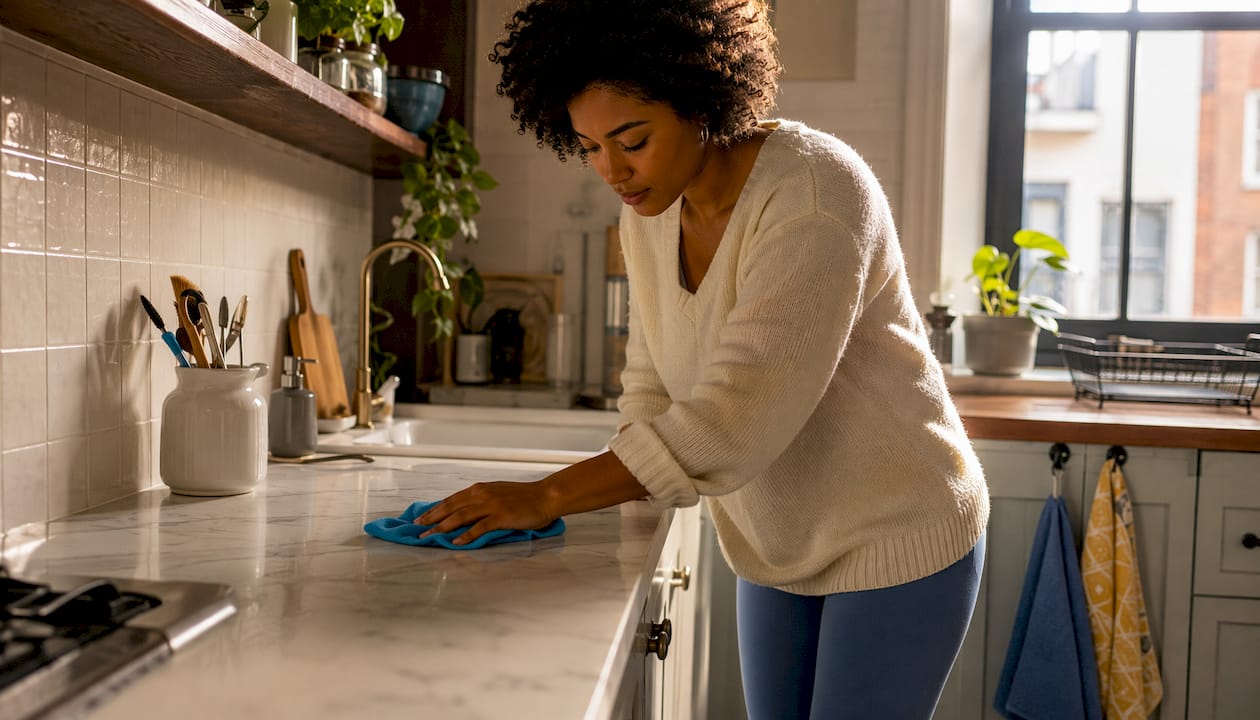
The dwell-time method
Spray your bathroom and kitchen surfaces, then walk away for about 10 minutes before scrubbing. The cleaner breaks down soap scum and grease while you handle something else — dishes, a quick floor sweep, or folding laundry. You end up doing two tasks in the time one used to take.
Room-specific micro-tasks worth building into your routine:
- Kitchen: wipe the stove and counters after cooking; don’t let grease sit overnight
- Bathroom: run a 30-second toilet brush pass daily; squeegee the shower after the last use to prevent soap-scum buildup
- Entry: wipe the landing surface, hang keys, and place shoes on a rack every single time
- High-touch surfaces: disinfect light switches, door handles, and remotes weekly
Always dust top to bottom, starting with ceiling fans and fixtures. Dust falls, so cleaning from the ceiling down means you never re-soil a surface you already wiped. It’s one of those techniques that sounds obvious until you realize most people do it backwards.
What does a realistic cleaning schedule look like for a small home?
Three compact schedules cover most situations. The daily routine takes about 15 minutes, the weekly clean runs 60–90 minutes, and the monthly plan targets one deep task at a time.
| Routine | Zone | Time Budget |
|---|---|---|
| Daily | Kitchen wipe + dishes | 10 min |
| Daily | Kitchen wipe + dishes | 10 min |
| Daily | Bathroom quick pass | 5 min |
| Daily | Entry reset | 2 min |
| Weekly | Bathroom deep scrub | 15–20 min |
| Weekly | Kitchen (appliances, sink) | 15–20 min |
| Weekly | Floors (vacuum + mop) | 15–20 min |
| Weekly | Dusting top to bottom | 10–15 min |
| Monthly | One deep target (oven, fridge, or blinds) | 30–45 min |
Divide your home into zones — bathroom, bedroom, kitchen, living area — and start farthest from the door, working toward the exit. This prevents tracking dirt back through cleaned spaces.
For shift workers or anyone who can’t commit to a single 90-minute block, two 30–45 minute sessions mid-week and on the weekend produce the same result. Pair tasks during dwell-time waits: while bathroom cleaner sits, wipe kitchen counters. No minutes wasted.
Pro Tip: Automate the decision by assigning each zone a day. Monday kitchen, Tuesday bathroom, Wednesday living area. For a small home, each zone takes 15–20 minutes — easy to fit into a weeknight. See weekly cleaning tasks you can automate for a deeper breakdown.
Storage systems that actually reduce your cleaning steps
Storage works when it reduces steps. If it takes three moves to put something away, it won’t happen consistently. The goal is one-move returns for daily items.
Concrete fixes that work in small spaces:
- Open hooks at the entry for bags, keys, and coats — no opening drawers or searching
- A mail caddy mounted near the door so paper never lands on counters
- Under-bed slim bins for seasonal items, freeing closet space for daily-use things
- A single grab-and-go toiletries caddy that moves from cabinet to shower and back
- Labeled bins for like items under sinks — they contain spills and reduce visual clutter
Place daily-use items within one reach path. If your coffee mug, coffee maker, and filters are all within arm’s reach of each other, the counter stays clear. If your cleaning caddy lives under the kitchen sink, you’ll actually use it. For a deeper look at storage layout ideas that work in compact rooms, One Day Doors & Closets offers practical guidance worth reviewing.
Limit the number of organizers you own. More bins mean more things to maintain. Choose easy-access solutions that support a nightly reset habit, and organize your home for easy cleaning by keeping only what you use weekly within arm’s reach.
Which cleaning tasks are worth hiring a professional for?
Hire out infrequent, high-effort tasks. Keep daily maintenance in-house. That’s the rule.
Tasks that make sense to outsource:
- Deep oven and refrigerator cleaning
- Move-out cleaning (deposit protection)
- Move-in cleaning (prior tenant residue)
- Short-term rental turnovers between guests
- Quarterly deep cleans of the full home
Pick one monthly deep target — oven, fridge, or blinds — to avoid the buildup that makes quarterly deep cleans feel overwhelming. When that quarterly clean arrives, a professional handles it faster and more thoroughly than most people can on a weekend.
Before booking, ask a cleaner these questions:
- What’s included in the scope — surfaces, appliances, inside cabinets?
- Do you bring supplies, or should I provide them?
- Are your cleaners background-checked and insured?
- What’s the difference between a recurring clean and a deep clean?
Simple prep steps reduce billed hours: declutter before the team arrives, clear surfaces, and gather any supplies you want used. Octomaids has handled tasks worth hiring out for homeowners and renters across the Portland and Vancouver, WA area since 2006 — the scope of what a pro visit covers often surprises first-time clients.
Your printable cleaning checklist for daily, weekly, and monthly tasks
Copy this to a notes app or print it for the fridge.
Daily (about 15 minutes)
- [ ] Wipe kitchen counters and stove
- [ ] Wash or rack dishes
- [ ] Quick bathroom pass (toilet brush, sink wipe)
- [ ] Squeegee shower after last use
- [ ] Entry reset (shoes, keys, mail)
- [ ] Open a window for 5 minutes
Weekly (60–90 minutes)
- [ ] Bathroom deep scrub (spray, dwell, scrub)
- [ ] Kitchen appliances and sink
- [ ] Vacuum and mop floors
- [ ] Dust top to bottom (ceiling fans first)
- [ ] Wipe high-touch surfaces (switches, handles, remotes)
- [ ] Change or wash linens
Monthly (one deep target)
- [ ] Oven interior
- [ ] Refrigerator shelves and drawers
- [ ] Blinds and window tracks
- [ ] Under-sink organization
- [ ] Baseboards and door frames
Emergency reset (under 5 minutes): clear surfaces, wipe counters, run a quick floor sweep, reset the entry.
Key Takeaways
Decluttering before you clean, working top to bottom, and reducing the steps to store things are the three habits that make cleaning a small urban home sustainable long-term.
| Point | Details |
|---|---|
| Declutter first, always | Clear surfaces before cleaning — you cannot clean what you cannot see. |
| Dwell time cuts effort | Spray surfaces and wait 10 minutes before scrubbing to reduce physical effort significantly. |
| Top-to-bottom dusting | Start with ceiling fans and work down so falling dust never re-soils a cleaned surface. |
| Reduce steps to store | One-move returns for daily items make nightly resets consistent and fast. |
| Octomaids for deep tasks | For move-out cleans, quarterly deep cleans, and rental turnovers, Octomaids handles the high-effort work so you don’t have to. |
The part most cleaning guides get wrong
Most small-space cleaning advice focuses on products and tools. Buy this caddy, use that microfiber cloth. The real problem is almost never the tools — it’s the sequence and the storage logic behind the routine.
What our team at Octomaids sees consistently: people clean around clutter instead of clearing it first, then wonder why the space still feels messy an hour later. The surface was wiped, but the visual noise remained. Decluttering is not a preliminary chore. It’s the cleaning.
The second thing most guides underestimate is how much a bad storage system costs you in time. If your cleaning caddy is buried behind three other things, you won’t grab it for a quick wipe-down. If your shoes have no hook, they’ll end up on the floor. The friction of a poorly designed storage system undoes every good cleaning habit you try to build.
Timeboxed routines work — a 15-minute daily reset genuinely prevents most mess from escalating. But they only work when the storage system makes the reset effortless. Fix the storage first, then build the habit.
Octomaids handles the cleaning you don’t want to do
Keeping up with daily and weekly maintenance is manageable once the system is in place. The tasks that genuinely drain time and energy are the infrequent, high-effort ones: a full move-out clean before handing back keys, a quarterly deep clean of appliances and baseboards, or a short-term rental turnover between back-to-back guests.
Octomaids has served homeowners, renters, and property managers across the Portland and Vancouver, WA metro area since 2006. Our family-owned team brings the same trusted cleaners to every visit, whether you need a one-time deep clean, a recurring weekly or biweekly service, or a move-in/move-out clean that protects your deposit. Before we arrive, just declutter the surfaces and clear the floors — that prep alone reduces the time we spend and keeps your cost down. Ready to hand off the hard part? See our services and book a visit.
Useful sources
- How to clean an apartment efficiently — dwell-time technique and 60-minute blitz workflow
- Apartment cleaning tips for renters — declutter-first principle and monthly deep-task cadence
- Apartment cleaning checklist — top-to-bottom dusting order
- Small Apartment Cleaning: Daily Habits for a Tidy Home — squeegee habit, portable caddy kit, and ventilation tips
- How to Clean Your Apartment in 5 Easy Steps — zone-based cleaning order and farthest-to-door flow
- The 10 Best Time-Saving Cleaning Hacks for Busy People — closing duties framework and timer method
- Octomaids: cleaning tasks worth hiring out — which chores to keep vs. outsource
- Octomaids: organize your home for easy cleaning — storage layout strategies that reduce steps
FAQ
What should I clean first in a small apartment?
Declutter all surfaces before touching a cleaning product. Once surfaces are clear, start with the kitchen, then the bathroom, then high-touch surfaces and floors.
How long should cleaning a small home actually take?
A daily reset runs about 15 minutes. A thorough weekly clean takes 60–90 minutes when you work by zone, starting farthest from the door and moving toward the exit.
What is the dwell-time technique?
Spray bathroom and kitchen surfaces with cleaner and wait about 10 minutes before scrubbing. The product breaks down grime during the wait, so you need far less physical effort.
When does it make sense to hire a professional cleaner?
Book a pro for move-out cleans, quarterly deep cleans, and short-term rental turnovers. These tasks are infrequent, high-effort, and directly affect your deposit or guest reviews. Octomaids covers all three service types in the Portland and Vancouver, WA area.
How do I stop clutter from coming back in a small space?
Reduce the steps to put things away. Open hooks, a mail caddy, and labeled bins make one-move returns possible — and the easier the return, the more consistently it happens.