



A proper bathroom deep cleaning removes soap scum, hidden grime, mineral deposits and small mold spots, and it saves disinfecting for when someone is actually sick, as CDC guidance explains. Follow the sequence below, or book our one-time deep clean at Octomaids if time, physical limits or stubborn mold stand in your way.
TL;DR:
- Work from top to bottom: dust high surfaces, pre-soak the shower and tub, clean the toilet and sink, scrub glass and grout, then vacuum and mop floors.
- For mold patches under 10 square feet, scrub with detergent and water; call a professional if growth returns or structural dampness appears.
- Disinfect when someone is sick; first clean grime, keep surfaces wet for at least one minute with bleach, and never mix it with other cleaners.
- Run the exhaust fan during and after showers, squeegee glass and walls, and dry wet materials within 24 to 48 hours to prevent mold growth.
- Use white vinegar for mineral film on glass and fixtures, but keep acidic cleaners off natural stone and unsealed grout to prevent surface damage.
Table of Contents
- What supplies and safety gear do you need first?
- How do you deep clean a bathroom room by room?
- How do you remove mold and stained grout safely?
- When should you disinfect, and how do you do it safely?
- How do you keep a deep-cleaned bathroom clean longer?
- What is the quick bathroom deep-clean checklist?
- Which eco-friendly and non-toxic cleaning products are worth using?
- How do you get rid of hard water stains?
- How should you declutter and organize bathroom storage while you clean?
- Why a professional deep clean can be the smartest next step
- Book our one-time bathroom deep clean at Octomaids
- FAQ
- Sources
What supplies and safety gear do you need first?
A deep clean goes faster when everything is within reach before the first spray. You do not need a cabinet full of specialty products. A small, well-chosen kit handles nearly every surface in the room.
Gather these items:
- Mild detergent or all-purpose cleaner
- White vinegar and baking soda
- A non-abrasive scrub brush and a small grout brush
- Microfiber cloths, a sponge and a squeegee
- A bucket and a mop
- A wet/dry vacuum, or a HEPA-capable vacuum, for loose debris and standing water
Protect yourself while you work. Wear nitrile or rubber gloves and eye protection, and open a window or run the exhaust fan the whole time. Never mix bleach with ammonia-based or acidic cleaners, because the CDC warns that the combination can release toxic vapors. Always read the label for contact time, which is how long a product must stay wet on the surface to work.
If you do choose bleach or an EPA-registered disinfectant, mix a fresh bleach solution each day. Diluted bleach loses its strength after 24 hours.
Pro Tip: Set every bottle, brush and cloth on a tray or a bath mat outside the splash zone so you never stop mid-scrub to hunt for a tool.
How do you deep clean a bathroom room by room?
Work from top to bottom so falling dust and drips land on surfaces you have not cleaned yet. Floors always come last. For a medium bathroom, set aside a block of time for one person, and expect the work to take less time when two people split the tasks.
Here is the order we follow on every visit:
- Clear the room. Remove towels, rugs, bottles and decor. Pull the shower curtain and wash it if the label allows.
- Dust high surfaces. Wipe the light fixture, vent cover and tops of cabinets. Vacuum the vent cover rather than shaking dust loose.
- Pre-soak the shower or tub. Spray a labeled tub cleaner, or a mix of white vinegar and a little dish soap, on the walls, tub and glass. Follow the product label, or let the mixture sit while you move on.
- Clean the toilet. Apply toilet bowl cleaner under the rim and let it work. Wipe the tank, seat, hinges and base, then scrub the bowl and flush.
- Do the sink and vanity. Clear the counter, wipe the basin and faucet, and clean the drain opening you can reach. If water flow is weak, unscrew the aerator and rinse out the mineral grit.
- Return to the shower. Scrub off the soap scum, work the grout lines with a grout brush and detergent, then rinse and dry.
- Finish mirrors and fixtures. Use glass cleaner with a squeegee, and polish chrome last.
- Clean the floor. Vacuum or sweep first, then mop. On tile floors, scrub the grout lines where dirt collects.
A few habits make the session smoother:
- Keep one cloth for the toilet and a separate set for everything else.
- Let products do the soaking so your arms do not have to.
- If you have a helper, one person takes the toilet and floor while the other handles the shower and glass.
- Rinse every cleaner off completely, because leftover residue attracts new grime.
Mechanical action, meaning actual scrubbing time, does more than most people expect. The CDC explains that dirt and soap scum form a barrier that shields germs from disinfectants, which is why you clean first and disinfect only if needed. If you want the same method for the rest of your home, our deep clean house checklist for every room follows the same top-to-bottom logic.
How do you remove mold and stained grout safely?
For small patches of mold, roughly under 10 square feet, scrub hard surfaces with detergent and water. The EPA’s guidance on mold cleanup says that approach, along with fixing the moisture source, is usually enough for damp bathrooms. Physically remove the growth rather than just spraying it. Dead spores can still trigger allergies.
Killing mold is not the same as removing it: dead mold spores remain allergenic, so scrub the residue away and dry the surface.
If grout stays stained after scrubbing, you can use bleach for stubborn discoloration. Dilute it correctly, keep the surface visibly wet for at least one minute, ventilate well and never combine it with another product. Rinse and dry afterward.
Pro Tip: Wet the grout line with plain water before applying cleaner, so the grout absorbs less product and rinses out faster.
Call a professional when mold returns even though you control moisture, when the affected area is large, when you see signs of structural dampness, or when anyone in the household has health concerns.
When should you disinfect, and how do you do it safely?
Cleaning, sanitizing and disinfecting are three different jobs, and the CDC separates them clearly. Cleaning removes dirt and impurities with soap and water. Sanitizing lowers the number of germs. Disinfecting kills germs using chemicals, and it is usually unnecessary in a healthy household. Save it for when someone is sick.
If you do disinfect, follow these safety steps:
- Clean the surface first, since leftover grime weakens the disinfectant.
- Keep the surface visibly wet for the full contact time on the label. For bleach, that is at least one minute.
- Mix a fresh bleach solution daily and never combine it with other products.
- Wear gloves and eye protection, and keep the fan running.
- Wash your hands when you finish.
Pro Tip: Write the mixing date on a strip of tape on your spray bottle. If it is more than a day old, pour it out and mix a new batch.
How do you keep a deep-cleaned bathroom clean longer?
Moisture is the real enemy, so most prevention comes down to drying. Mold spores are already in the air indoors, but the EPA notes they cannot grow without moisture, and wet materials should dry within 24 to 48 hours.
- Run the exhaust fan during every shower and for several minutes after.
- Squeegee the glass and walls after each use.
- Wipe the counters and sink every few days so splatters never harden.
- Spot-scrub small marks right away instead of waiting for a full deep clean.
- Consider a fan timer or a small dehumidifier if the room stays damp.
- Reseal grout periodically in high-moisture rooms.
For a bigger picture, our home cleaning best practices cover habits that support the whole house between visits.
What is the quick bathroom deep-clean checklist?
Keep this list at the sink and tick off each step:
- Remove items, open a window or start the fan, and gather your kit with gloves and eye protection on.
- Dust the vent, light and high surfaces.
- Pre-soak the shower and tub.
- Clean the toilet.
- Clean the sink, vanity and drain.
- Scrub the shower, grout and glass, then rinse.
- Polish mirrors and fixtures.
- Vacuum, then mop the floor.
- Dry everything, put items back and do a final inspection.
Check the label contact time on any disinfectant, and never mix products.
Which eco-friendly and non-toxic cleaning products are worth using?
You can get a thorough clean with gentle ingredients, and you often need fewer products than you think. White vinegar cuts mineral film and soap scum. Baking soda adds a mild scrub for sinks and tubs. A drop of dish soap in warm water handles everyday grime and, according to the EPA, a mild detergent works for hard surfaces affected by mold.
A few ground rules keep “natural” cleaning safe and effective:
- Never combine vinegar with bleach. Pairing different cleaners is how toxic fumes happen, even when each product seems harmless alone.
- Avoid vinegar on natural stone. Marble, granite and travertine can etch, so use a pH-neutral stone cleaner there.
- Look at the label, not the front. Words like “green” or “natural” are not regulated claims. Check the ingredient list and any third-party certification the manufacturer lists.
- Buy concentrates. One bottle of concentrated cleaner diluted at home means less plastic and less money spent.
Be realistic about what homemade solutions can do. A NIOSH-supported study of three home products on bacteria found some do-it-yourself cleaners clean well, while EPA-registered or conventional disinfectants achieved higher germ reductions, and homemade solutions work best when freshly prepared. In plain terms, gentle products are an excellent choice for routine and deep cleaning, but reach for a labeled disinfectant when you truly need to kill germs, such as after illness.
Finally, ventilate even when you use mild products. Fumes from any cleaner are easier to tolerate when fresh air moves through the room, and an exhaust fan costs you nothing.
How do you get rid of hard water stains?
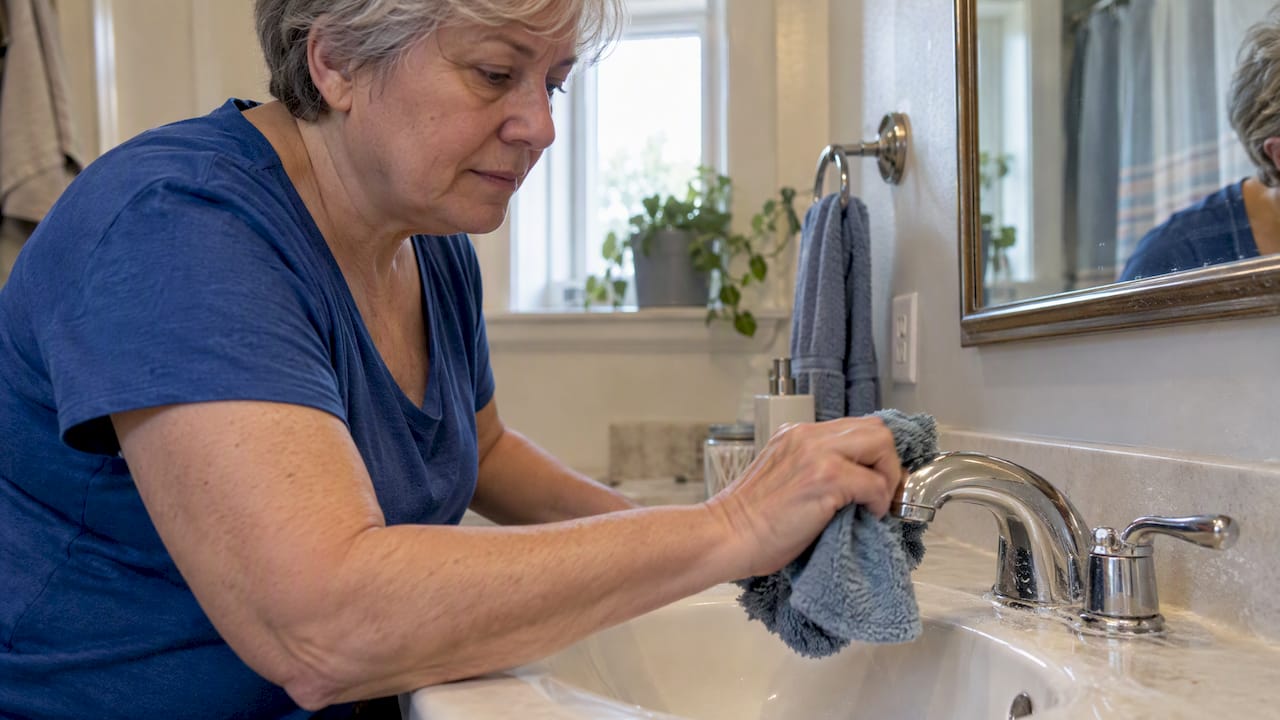
Hard water leaves chalky white film on glass, spotted chrome and orange-tinged crust around faucets. Those marks are mineral deposits, and ordinary soap does little against them. Acid does the work, which is why white vinegar is the classic fix.
Try this approach for each problem area:
- Faucets and showerheads: Soak a cloth in vinegar, wrap it around the fixture and let it sit. Wipe, then scrub gently with an old toothbrush. For a clogged showerhead, a vinegar-filled bag secured around it may help loosen buildup.
- Glass doors: Spray with vinegar, wait a few minutes, then rub with a damp microfiber cloth or a non-scratch pad. Finish with a squeegee.
- Tile and tub: Make a paste of baking soda and a little vinegar for stubborn patches, scrub with a soft brush and rinse well.
- Toilet bowl: Apply a toilet bowl cleaner made for mineral rings, or let vinegar sit in the bowl before brushing.
Use patience instead of pressure. Steel wool and harsh powders scratch glass and fixtures, and scratches hold even more grime. Keep acidic cleaners off natural stone and unsealed grout, which they can damage.
Prevention is cheaper than repeated scrubbing. Squeegee glass after showers, wipe the faucet dry and run the exhaust fan, so water has little time to evaporate and leave minerals behind. If hard water is a constant battle in your home, a water softener or a showerhead filter can cut the buildup at its source.
For tough fixtures that are part of a trim or door area, you may also want to protect nearby surfaces first. This partner resource on cleaning interior doors may be useful when your bathroom door and casing need attention at the same time.
How should you declutter and organize bathroom storage while you clean?
A deep clean is the best moment to sort your storage, because every item is already out of the cabinet. Empty one area at a time so the room does not become unmanageable, and lay everything on a clean towel in the hallway or on a nearby counter.
Sort with three piles: keep, toss and relocate. Toss anything expired, leaking, dried out or no longer used. Check medications and sunscreen for dates, and dispose of old medication following local take-back guidance rather than flushing it. Relocate items that do not belong in a humid room, such as spare towels you rarely use or backup supplies that can live in a hallway closet.
Wipe the inside of each drawer and shelf with a damp microfiber cloth and mild detergent before anything goes back. Dust, hair and sticky rings hide in those corners. Let surfaces dry completely first, because trapped moisture invites mildew.
When you restock, think about reach and routine:
- Put daily items at eye level and in front.
- Use small bins or drawer dividers so products do not slide together.
- Store extra rolls and refills on higher shelves.
- Keep cleaning supplies together in one caddy that you can carry from room to room.
- Leave counters nearly bare, since fewer objects mean faster wipe-downs and fewer places for grime to settle.
A tidy bathroom does more than look good. Clear surfaces make the weekly touch-up quicker, so you spend less time on the next deep clean.
Why a professional deep clean can be the smartest next step
Not every household has three free hours, strong knees or the patience to scrub grout lines. When time is short, when your body limits kneeling and reaching, or when grime and mold keep coming back, handing it off is a practical choice, not a failure. Trained cleaners work through a bathroom in an efficient order and reach spots many people skip.
If you decide to hire someone, ask four things: whether they offer a one-time deep clean, whether they bring their own supplies, whether the same team comes each visit, and whether they carry insurance and a satisfaction guarantee.
— Steven
Book our one-time bathroom deep clean at Octomaids
When you would rather get your evening back, we handle it. Our one-time deep cleaning service is delivered by a dedicated team, and every visit is backed by our satisfaction guarantee.
Before you request a quote, it helps to ask us:
- What is included in the deep clean for each room?
- Do you bring the supplies and equipment?
- What is the price estimate for my home?
You can also read our deep clean vs regular clean guide to compare the two. Ready to go? Request a one-time deep clean quote and tell us when it suits you.
FAQ
How much does room cleaning cost?
Price depends on the size of the room, how much buildup there is and the type of service you choose. Current prices are on our website.
What should you use to deep clean your bathroom?
Start with a mild detergent, white vinegar, baking soda, a grout brush and microfiber cloths. Add a labeled tub cleaner for soap scum, and use an EPA-registered disinfectant only when someone has been sick.
What is the seven-step cleaning process in housekeeping?
Housekeeping routines differ from one team to the next, so there is no single official list. A common version for bathrooms is: clear the room, dust high surfaces, pre-soak, scrub, rinse, polish and mop, which is the order we use in this guide.
Can you leave vinegar in a toilet bowl overnight?
Yes, vinegar left in a toilet bowl overnight can loosen mineral rings, and then you scrub and flush in the morning. Never add bleach or a bleach-based cleaner to the bowl while vinegar is in it.
Recommended
- Deep Clean House Checklist for Every Room
- Cleaning Tasks Worth Hiring Out for Busy Homeowners
- Deep Clean vs Regular Clean: A Homeowner’s Guide
- What Does Deep Cleaning Include? a Room-by-Room Guide
About Octomaids
Octomaids is a locally operated professional cleaning company serving Vancouver, Clark County, and the surrounding Portland metro area. Since 2006, our cleaning teams have helped homeowners, renters, property managers, and businesses with recurring cleaning, deep cleaning, move-in/move-out cleaning, and commercial cleaning.
Our cleaning articles are reviewed to ensure the information reflects our real-world experience and professional cleaning practices.