


Airbnb quality control comes down to one habit: every guest finds the same clean, accurate, working home that your listing promised. Airbnb scores that habit through guest reviews and its own hosting quality system, and cleanliness is the category hosts control most directly. The most reliable way to hold it steady is a written standard, a photo-backed inspection after each cleaning, and the same trained team doing the turnover every time. In Vancouver, WA and Portland, OR, that is the work our family-owned team has done for short-term rental hosts since 2006.
Key Takeaways
- Airbnb’s ground rules require accurate listings, honored reservations, timely communication and a clean, hazard-free home that is cleaned between stays.
- Guests rate cleanliness, accuracy, check-in, communication, location and value separately, so one weak category drags down your average.
- A room-by-room checklist, photos after cleaning and a quick inspection before arrival catch most problems before a guest does.
- A consistent cleaning team makes the checklist work, because the same people learn exactly how your property should look.
- Superhost status needs an average of at least 4.8 stars, so small slips matter.
Table of Contents
- What Airbnb means by quality
- How guests score you
- A turnover quality system in three parts
- The turnover inspection
- Keep the listing as accurate as the clean
- Why consistency is the hard part
- Perspective: quality is a repeatable routine
- Let us handle the turnovers
- FAQ
- Sources
What Airbnb means by quality
Airbnb does not judge quality by one number. Its ground rules for hosts ask for accurate listings, honored reservations and promised refunds, timely replies, and a home that is free of health hazards, highly clean and cleaned between stays. Repeated low ratings can trigger messages nudging a host to meet guest expectations.
The same rules say hosts must not use AI or digital editing to hide flaws or add amenities that do not exist, and must disclose surroundings that affect noise. Accuracy is a quality standard, not just a marketing choice.
Behind the scenes, Airbnb’s global quality report explains that cleanliness, ease of check-in, accuracy, host cancellations and Community Support issues all feed its evaluation of each listing, not the overall rating alone. Airbnb reports it has removed over 400,000 listings that failed its standards since launching the updated system in 2023, alongside roughly a 15% year-over-year drop in quality-related customer service issues.
For US hosts, the 2024 spring update added a verification badge and said guests would be shown when a listing ranks in the bottom 10 percent. Airbnb has also announced that house rules are changing, with hosts notified by email and in the app if their rules do not meet the new policy. Watch your inbox and the Airbnb app for those notices.
How guests score you
Guests and hosts have 14 days after checkout to review each other. Guests give an overall star rating plus six category ratings: check-in, cleanliness, accuracy, communication, location and value, each from one to five stars. Airbnb’s reviews page says the average overall rating appears in search after three guests have rated a listing. Superhosts must keep an average of at least 4.8 stars and meet other criteria, and ratings also feed Guest Favorites.
That 4.8 line is tight. One analysis of the Superhost thresholds by RentTools estimates that a single 3-star review among 50 lowers the average by roughly 0.04. A missed hair on a bathroom floor looks small. Across a year of bookings it is a measurable cost.
| Category guests rate | What you control | Typical failure |
|---|---|---|
| Cleanliness | Turnover cleaning and inspection | Dust under beds, bathroom hair, dirty oven or fridge |
| Accuracy | Photos and listing text | Outdated photos, missing amenities |
| Check-in | Instructions, lock codes | Unclear directions, stale codes |
| Communication | Reply speed and clarity | Late or generic replies |
| Value | Condition, amenities, price | Worn linens, tired furniture |
Cleanliness is the category where a system pays off fastest, and the one we can help with directly.
A turnover quality system in three parts
Hosts who run several stays a month tend to land on the same structure. TIDY’s property management guide describes a three-part system, and it fits how we think about cleaning quality.
1. A checklist that defines done
“Clean” means different things to different people. A good checklist is room by room and objective: beds made to a stated standard, mirrors streak-free, floors under furniture vacuumed, fridge and oven interiors wiped. A rental inspector quoted by Rent Responsibly calls the checklist an inspector’s best tool because it replaces memory, and suggests adding photos so any new cleaner knows exactly how beds and towels should look.
If you want a starting point, our short-term rental cleaning checklist and our page on Airbnb cleaning standards lay out what hosts are expected to meet.
2. Photo verification of what fails most
TIDY recommends time-stamped photos of the items that fail most often: staged beds, bathroom fixtures, floors under furniture, and the inside of the fridge and oven. Photos give you proof of the state in which the home was left, and they let you spot a pattern, such as the same missed corner every third turnover, without driving over.
3. Par-level restocking
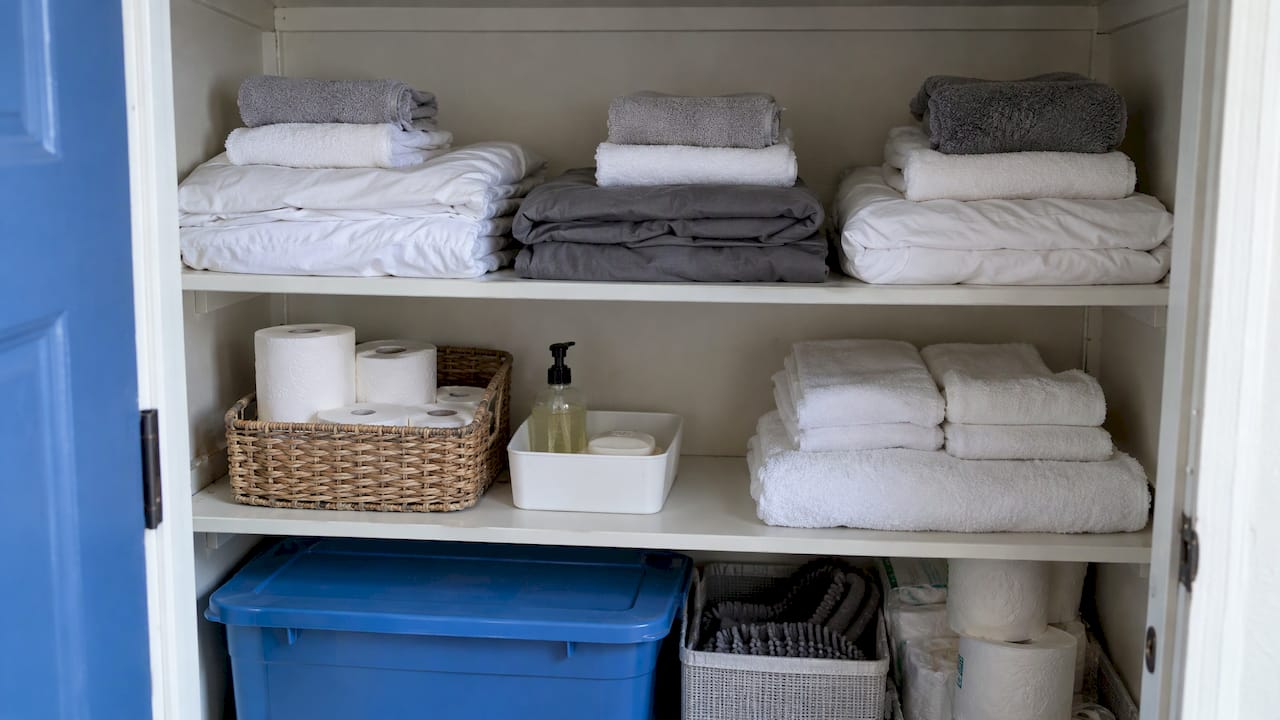
Airbnb’s Prepare your space guide lists what guests expect: toilet paper, hand and body soap, a towel and a pillow for each guest, and linens for each bed. TIDY suggests about three linen sets per bed, so one is on the bed, one is in the wash and one is in reserve. A stock-out on a Saturday is a communication and value problem as much as a cleaning one. Our Airbnb cleaning supplies list shows what to keep on hand for every turnover.
The turnover inspection
A turnover inspection is a quick check after cleaning but before the next guest arrives. Rent Responsibly’s guide describes it as the point where you catch things like a malfunctioning smoke detector or a leaky faucet, and recommends property-specific, seasonally adjusted checklists.
A practical order, working from the door inward:
- Entry and access. Confirm the lock works and reset the entry code. Airbnb’s safety policy requires changing entry codes between reservations.
- Bedrooms. Check beds against your photo standard, look under beds and in drawers for left belongings, and inspect linens for stains or thinning.
- Bathrooms. Look at grout, drains, mirrors and fixtures. Confirm soap, toilet paper and towels are at par.
- Kitchen. Open the fridge and oven, check the dishwasher is empty and clean, and confirm the basics are stocked.
- Safety devices. Airbnb’s safety policy asks hosts to keep smoke and carbon monoxide detectors working and regularly tested. TIDY suggests monthly testing, with batteries replaced at least annually.
- Tech. Test wifi and the TV. Hostaway’s turnover checklist includes both, plus photographing each staged room.
- Known hazards. Address fire, electrical, mold, pest or structural issues before accepting reservations. Airbnb’s policy names these directly, and says it provides a smoke and CO detector at no cost to eligible hosts on request.
Monthly, add the maintenance items: HVAC filters (TIDY suggests monthly checks in heavy-use seasons), water heater flushing about once a year, and gutters each spring and fall.
Keep the listing as accurate as the clean
A spotless home still earns a poor accuracy score if the listing misleads. Airbnb’s Maintaining quality resource advises keeping photos, amenities and descriptions current, updating the listing when seasonal amenities close, and giving step-by-step check-in instructions with photos. It also notes a Superhost who sends house information and arrival instructions three days before check-in, and that compatible smart locks can generate a unique code for each stay.
Refresh your photos after any renovation, new furniture or major wear. Our real estate photo cleaning checklist is useful the day you shoot new images, since the home needs to look the way it will on a typical guest day.
Why consistency is the hard part
A checklist works only when the person following it knows your property. When a different cleaner arrives each turnover, standards drift: one person stages the pillows your way, another does not, and the oven gets skipped when nobody owns it. Hosts feel this most when they are not on site. That is why short-term rental cleaning is its own discipline, as we explain in why STR cleaning differs from residential.
Our approach is to assign the same dedicated, background-checked, trained and insured team to your property for every visit, rather than sending random staff. Over time, they learn your photo standard, your layout and where problems tend to show up.
Perspective: quality is a repeatable routine
Hosts often tell us they only hear about a cleaning problem when a review lands. By then the guest has already left and the rating is set.
We think of quality control as the opposite of a rescue. It is the boring, repeatable routine that makes a rescue unnecessary: the same team, a written definition of clean, and a home that looks on Tuesday the way it looked last Friday.
That is why we send the same dedicated team to every visit. Family-owned, locally operated, and not a franchise, we have served Vancouver, WA and Portland, OR since 2006, and the hosts who stay with us longest are the ones who treat cleaning as a system, not a task.
Steven
Let us handle the turnovers
If you host in Vancouver, WA, Clark County or the Portland metro area, our Airbnb and vacation rental cleaning is built around this routine: a dedicated team, satisfaction-guaranteed work, and turnovers you do not have to supervise. If you need the home reset before you begin, a one-time deep clean gives you a clear baseline. For same-day changeovers, see our page on same day Airbnb cleaning.

To discuss your property, start from our services page.
FAQ
What is Airbnb quality control?
It is the combination of Airbnb’s own hosting quality system and the routine a host uses to meet it. Airbnb weighs guest feedback, cleanliness, accuracy, check-in, cancellations and support issues. Hosts respond with checklists, inspections and consistent cleaning.
How often should I inspect my Airbnb?
Do a quick inspection after every cleaning and before the next arrival. Add a deeper maintenance check monthly for filters and alarms, and seasonally for gutters and larger items.
What rating do I need for Superhost?
Airbnb’s reviews page states an average overall rating of at least 4.8 stars, along with other criteria. Check Airbnb’s current Superhost requirements for the full list.
Can Airbnb remove my listing for poor quality?
Yes. Airbnb has said repeated or severe ground-rule violations can lead to listing removal, and its quality system weighs guest feedback, host cancellations and customer-service issues. Staying accurate, clean and responsive is the best protection.
Sources
- Airbnb ground rules for hosts
- Airbnb safety policy
- Airbnb global quality report
- Airbnb 2024 spring update
- Airbnb: important changes to house rules
- Airbnb: why reviews matter
- Airbnb: Prepare your space
- Airbnb: Maintaining quality
- Airbnb: update on hosting quality
- Rent Responsibly turnover inspections guide
- TIDY turnovers and maintenance guide
- Hostaway turnover checklist
- RentTools Superhost thresholds
Recommended
- Airbnb Cleaning Standards: What Hosts Must Meet in 2026
- Airbnb Cleaning Supplies List: What to Stock for Every Turnover
- Short Term Rental Cleaning Checklist: Host’s Guide
- How Cleaning Shapes Your Rental Reviews and Ratings
About Octomaids
Octomaids is a locally operated professional cleaning company serving Vancouver, Clark County, and the surrounding Portland metro area. Since 2006, our cleaning teams have helped homeowners, renters, property managers, and businesses with recurring cleaning, deep cleaning, move-in/move-out cleaning, and commercial cleaning.
Our cleaning articles are reviewed to ensure the information reflects our real-world experience and professional cleaning practices.